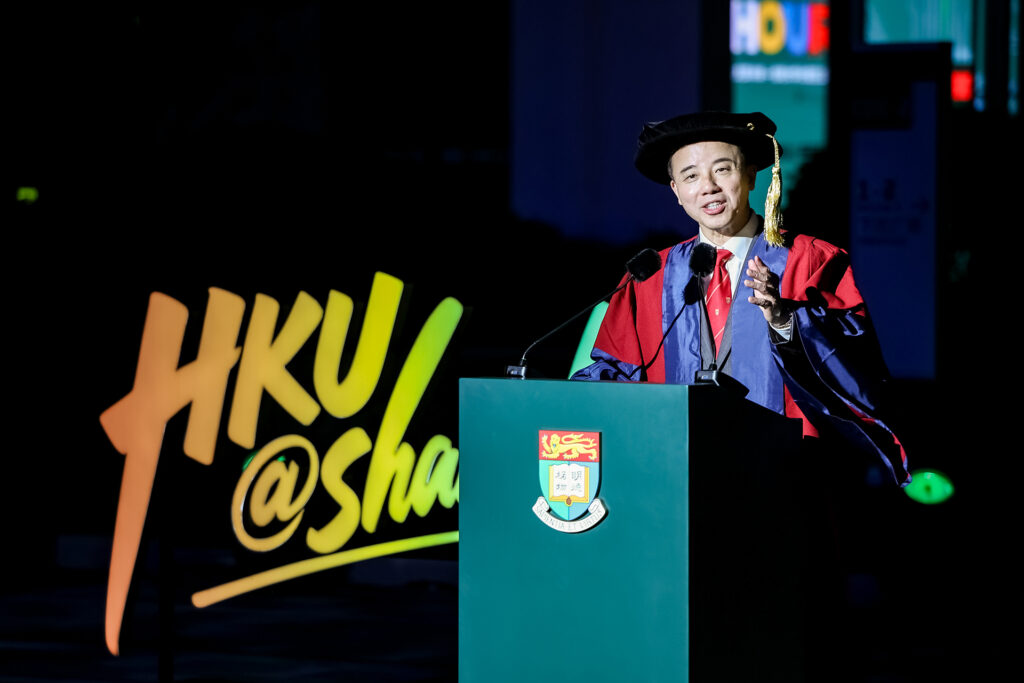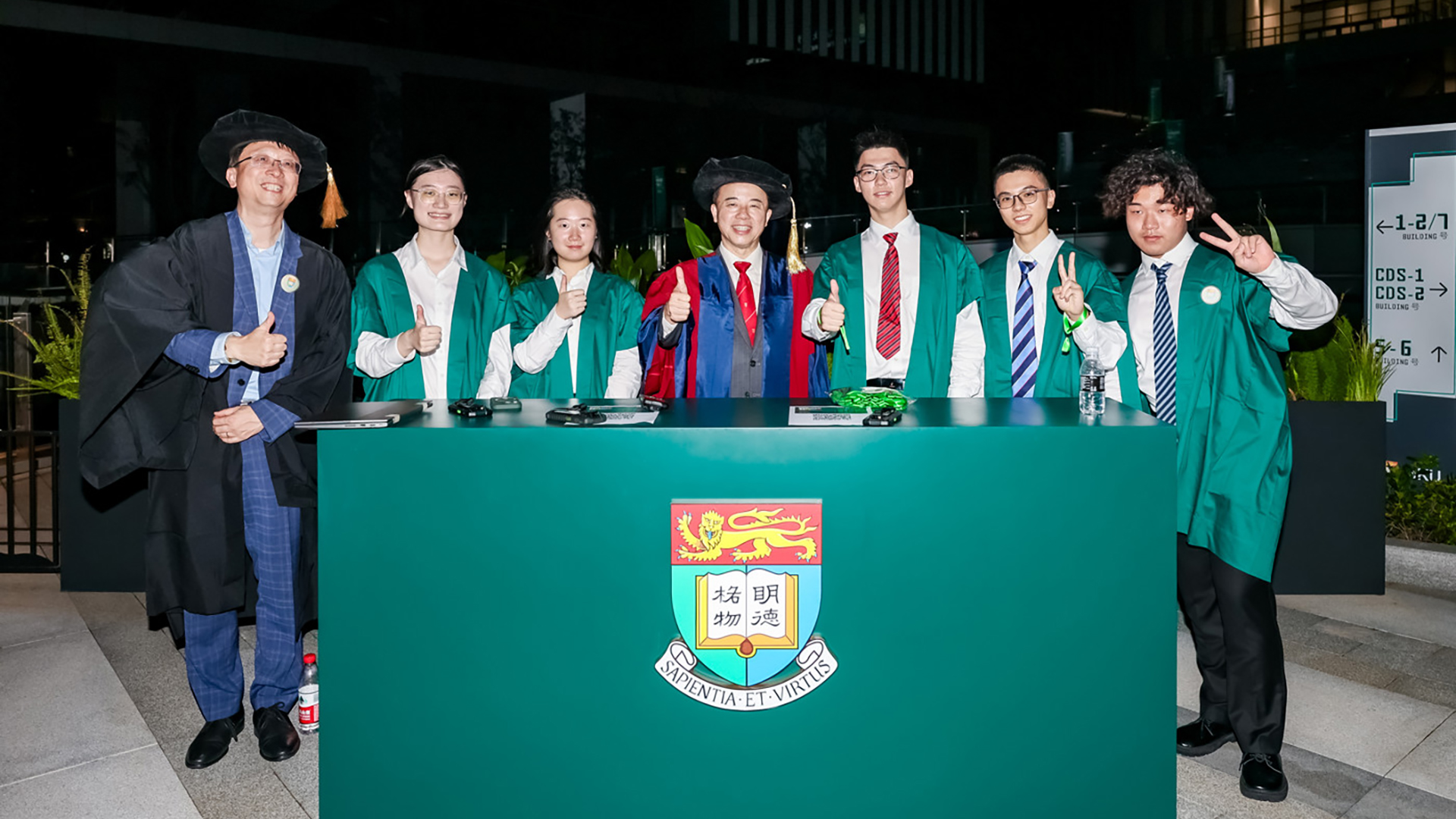
In celebration of a major milestone in its strategic development in Shanghai, the University of Hong Kong held the ‘HKU Magic Hour’ event and the grand opening of Phase II of the HKU Zhangjiang Base on August 30. “The Magic Hour is the most beautiful time of the day,” said HKU President and Vice-Chancellor Professor Xiang Zhang. “I hope everyone at the Zhangjiang Base can find their own ‘Magic Hour’ here, embarking on a marvellous journey of innovation.”
The landmark ceremony was attended by Mr Zheng Li, Member of the Standing Committee of the Communist Party of China (CPC) Shanghai Municipal Committee and Secretary of the CPC Pudong New Area Committee; Ms Fan Jiang, Secretary of the Shanghai Municipal Working Committee of Education and Health; and Ms Difang Zhang, Deputy Governor of Pudong New Area. They joined Professor Zhang, HKU faculty, students, and alumni, to witness the opening of this state-of-the-art facility, marking a new chapter in education, research, and talent exchange between Hong Kong and Shanghai.
Following the launch of HKU’s comprehensive Shanghai strategic blueprint in February this year, the completion and opening of Phase II within just six months signifies a rapid transition from strategic planning to full implementation and deepened development. This milestone substantially strengthens HKU’s academic and research footprint in the Yangtze River Delta.
Professor Zhang noted, “If the launch six months ago was about embarking on a dream, this moment is about gathering our strengths, setting sail, and writing a new chapter of deepened cooperation and collaborative innovation between HKU and Shanghai.”
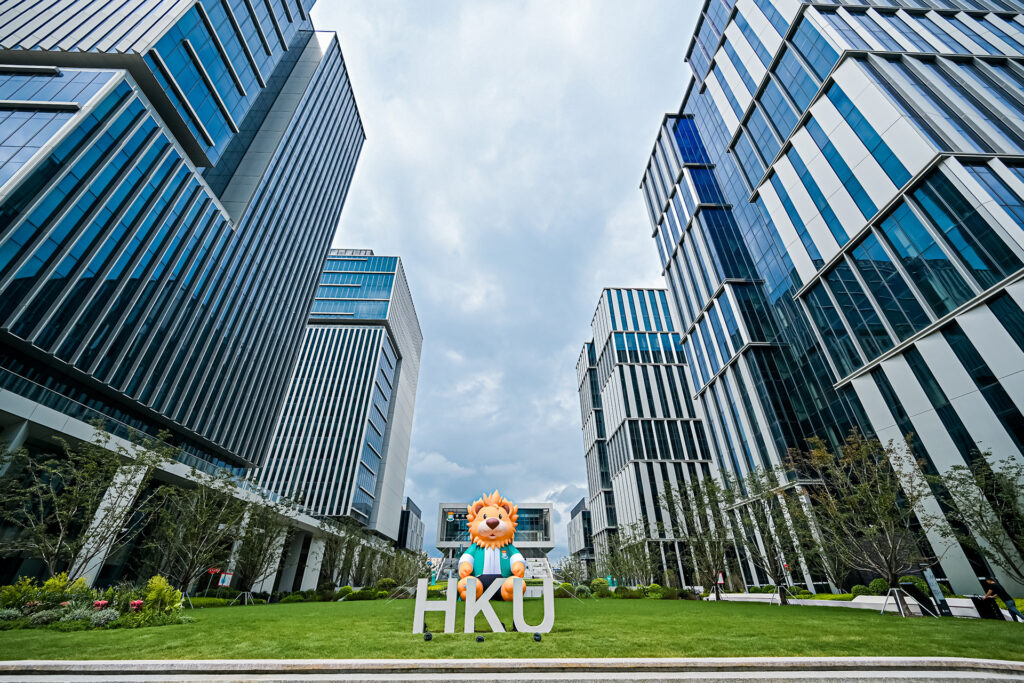
The event featured a lighting ceremony led by Professor Zhang, Secretary Zheng Li, and other officiating guests in front of Building 3. A spectacular light show illuminated Building 3 and the adjacent Building 5, officially unveiling Phase II of the Zhangjiang Base.
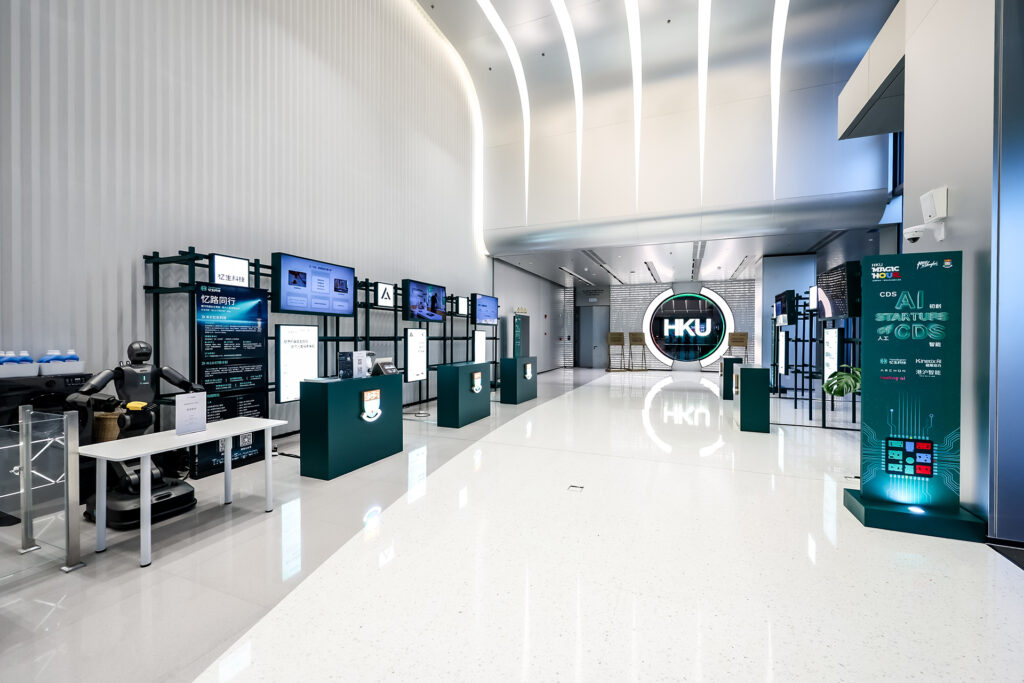
Serving as the cornerstone of this expansion, Building 3 functions as a state-of-the-art research and education hub, housing the AI Labs, research and collaboration labs, Intelligent Computing Research Center, and teaching collaboration labs dedicated to pioneering scientific inquiries. Complementing this academic focus, Building 5 is designed to enrich campus life and foster co-creation, featuring dedicated spaces for sports, student interaction, and collaborative projects. Notably, the ‘University Galleria’ is introduced to bring HKU’s centuries-old High Table Dinner tradition directly to Shanghai to enhance the student experience and deepen community bonding.
This September, the Zhangjiang Base welcomed over 500 students from around the world for the new semester, offering them hands-on research opportunities closely aligned with industry needs and market dynamics. Professor Zhang expressed high hopes that HKU researchers and students would utilise this vibrant technological hub to push scientific boundaries, integrate with local industries, and build a full-chain innovation ecosystem combining research, education, and industrialisation.
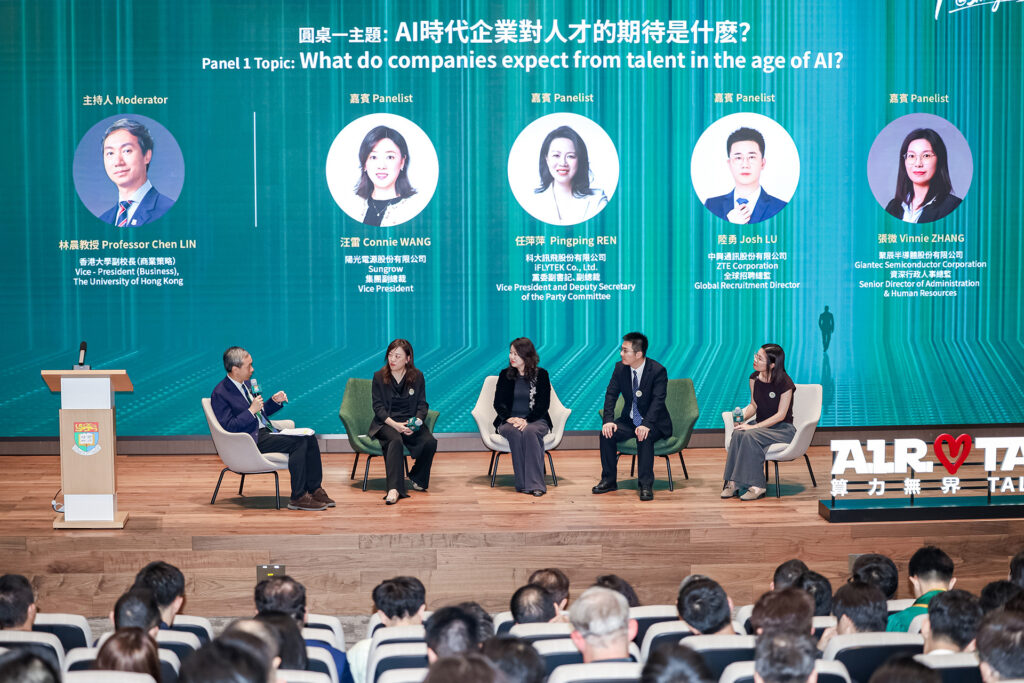
Professor Chen Lin, Vice-President and Pro-Vice-Chancellor (Business) of HKU, moderated the Forum. “As we discuss AI, large language models, and computing power, we must ultimately return to the human element,” Professor Lin noted in his opening remarks. “What kind of talents should universities cultivate in the AI era? What does society actually need?”
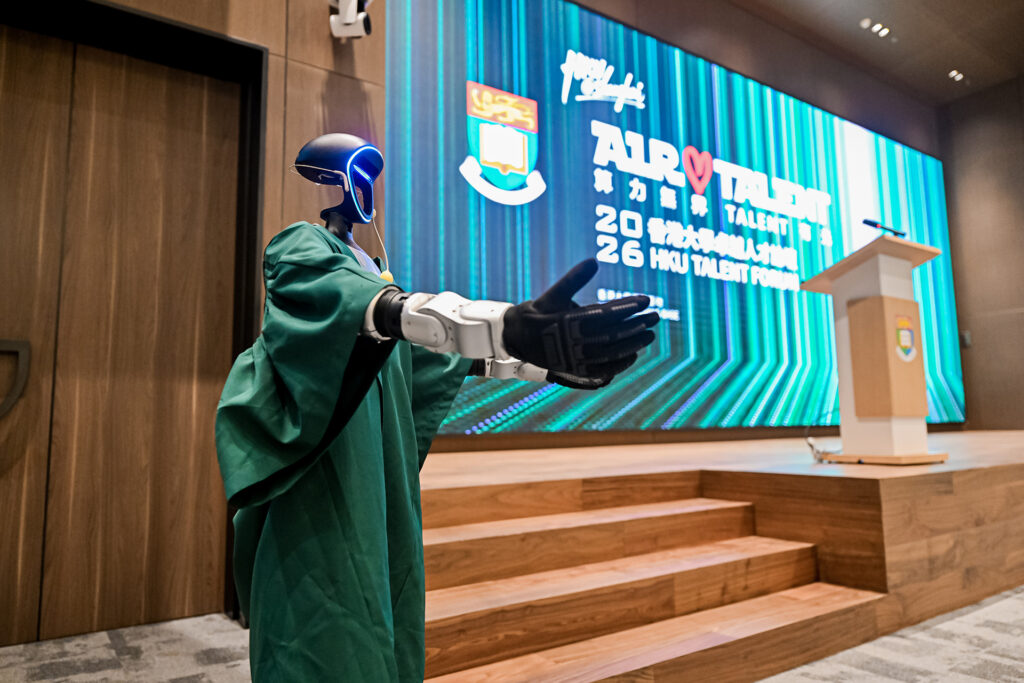
Professor Zhang delivered a keynote address titled ‘Unbounded Computing Power, Brilliant Talents – HKU’s Talent Mission in the AI Era’, sharing insights on internationalised education, HKU’s Shanghai strategy, and university-industry collaboration. Mr Ning Jiang, Deputy President of Shanghai Foreign Service (Group) Co Ltd, also delivered a speech on redefining talent value through human-machine collaboration.
At the Forum, two panel discussions – ‘Industry Expectations of AI Talents’ and ‘University-Enterprise Co-cultivation’ – convened industry leaders to explore how to integrate market demands into university curricula, creating authentic internship and practice opportunities for students. The Forum also hosted the HKU AI Labs Partnership Signing and Unveiling Ceremony with memorandums of understanding signed with 17 Hong Kong and Chinese Mainland companies, inaugurating collaborations in cutting-edge fields such as embodied AI, fintech, and AI infrastructure, alongside partnership agreements with start-up incubators under HKU’s School of Computing and Data Science, accelerating the translation of scientific research into industrial applications.
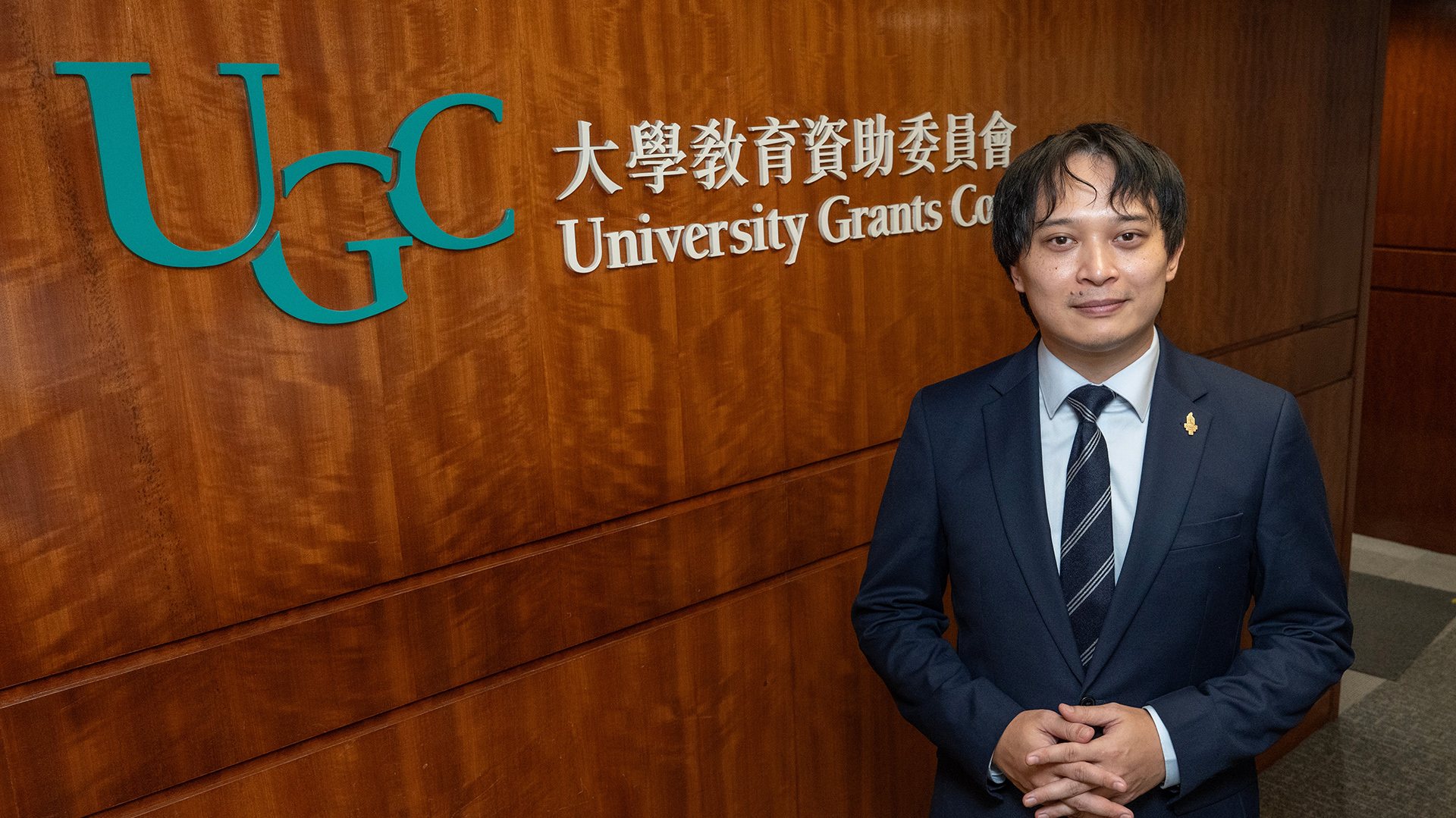
Zhangjiang Science City, where the HKU Zhangjiang Base is located, is one of Shanghai’s core artificial intelligence clusters. Its research environment and access to the Chinese Mainland’s technology ecosystem were some of the reasons HKU students chose the programmes offered by the School of Computing and Data Science spanning the HKU campus and the HKU Zhangjiang Base. “Our students can do internships and participate in frontier technology without leaving our campus,” said Professor Yi Ma, Director of the School of Computing and Data Science.
Marcus Law, a second-year Hong Kong undergraduate studying computer science, aims to gain insight into the operations, underlying technical systems, and research priorities of the corporations based there during his term in Shanghai.
Hailing from Xinjiang, Kazakh student Tunige Tuerxunbieke earned her undergraduate degree in computer science at Tsinghua University before entering HKU for her master’s studies in the same discipline. “Hong Kong universities provide a lot of help for student innovation and place great emphasis on an innovative atmosphere,” she said. She added that the programme grants participants considerable flexibility, enabling them to complete internships either in the Chinese Mainland or locally in Hong Kong.
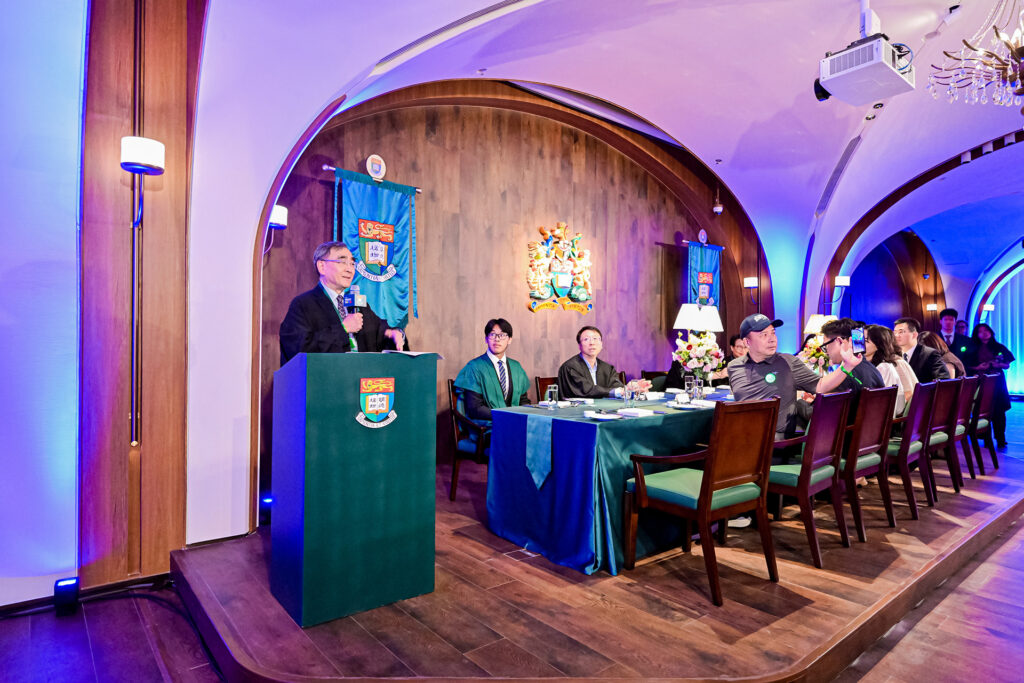
The milestone day concluded with the inaugural High Table Dinner held at the Zhangjiang Base. As one of HKU’s most cherished campus traditions, the High Table Dinner fosters academic heritage, community bonding, and intergenerational dialogue among scholars, alumni, and distinguished guests.
From the unveiling of the Phase II campus to the insightful dialogues at the HKU Talent Forum, and finally, the inaugural High Table Dinner, the day’s events perfectly reflected HKU’s core philosophy: nurturing talent, driving front-end research, bridging industry partnerships, and enriching growth through University culture.
By embedding itself in Zhangjiang’s world-class innovation ecosystem, HKU aims to drive interdisciplinary breakthroughs and nurture future-ready global leaders. In addition to the HKU Zhangjiang Base, the University also operates from three other locations in Shanghai, including the HKU Shanghai Headquarters located in the century-old Bund 22; the Bund SOHO Base, designed as an international platform that integrates the ‘technology × humanities’ concept hosting academic activities for the HKU Business School and the Faculty of Law; and the Caohejing Base housing interdisciplinary research institutes. The four strategic bases are set to become key platforms for academic exchange, technological innovation, and industry collaboration, reinforcing HKU’s reputation as a global leader in education and research. Drawing on the unique strengths of both Hong Kong and Shanghai, HKU will continue to leverage Shanghai as a key strategic anchor, and advance steadily toward its vision of becoming a world-class university that leads the future of humanity.