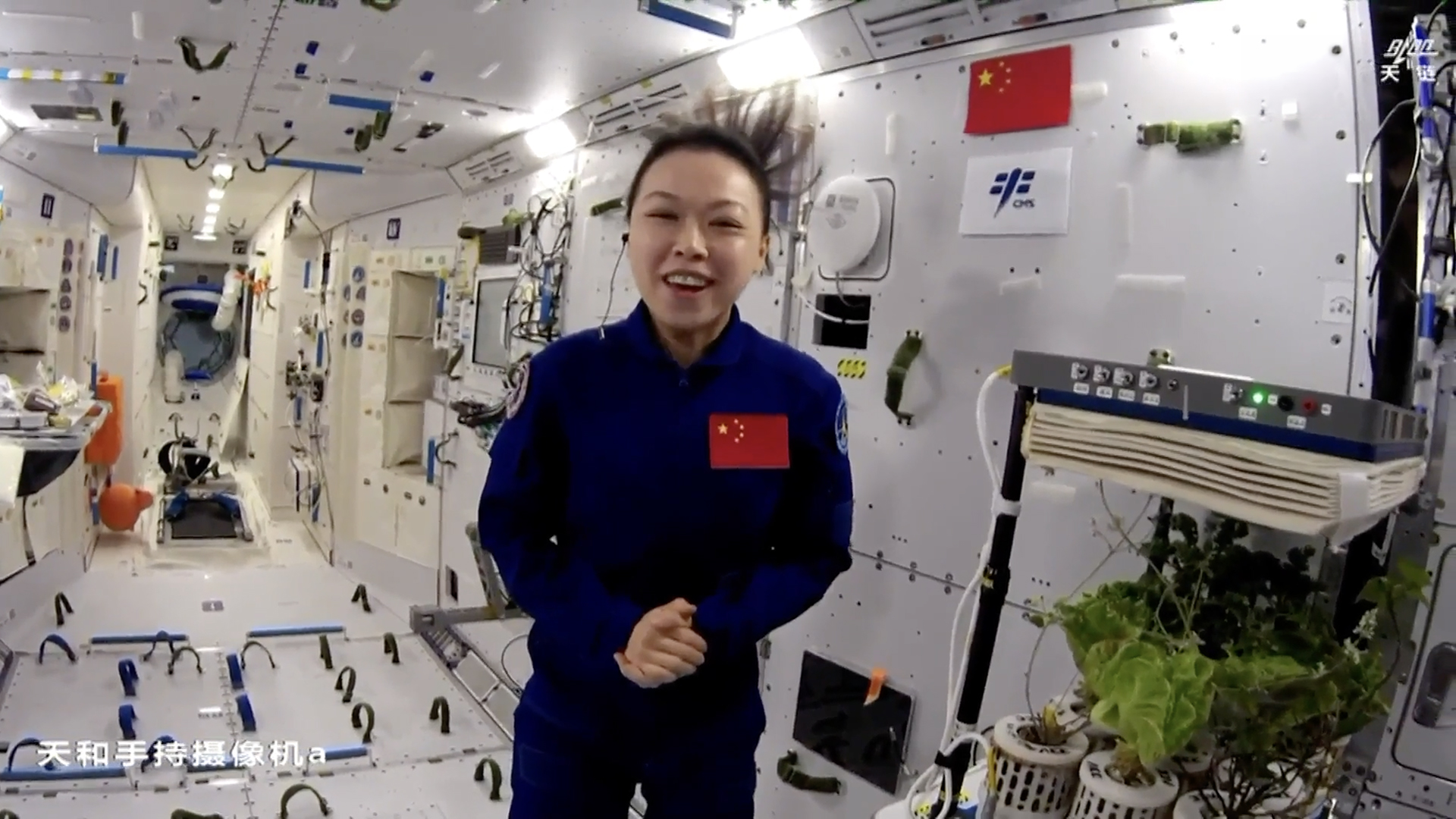
Not many can claim to have had a teacher who was an astronaut, and fewer still have been taught by astronauts who were literally in space!
But for an exhilarating 90 minutes, that’s exactly what young people from Hong Kong and Macao were treated to when HKU alumna Dr Lai Ka-ying and members of the Shenzhou-23 crew successfully conducted a live-broadcast class from aboard China’s Tiangong Space Station on September 9.
Dr Lai became Hong Kong’s first payload expert when she blasted off into space as part of the Shenzhou-23 Manned Spaceflight Mission this past May. Having spent close to four months in orbit, she joined Mission commander Dr Yangzhu Zhu and astronaut Zhiyuan Zhang to deliver a ‘Tiangong Class’, in which they conducted real-time science experiments, explained to viewers on Earth what their lives onboard a space station was like, and took questions from the audience.
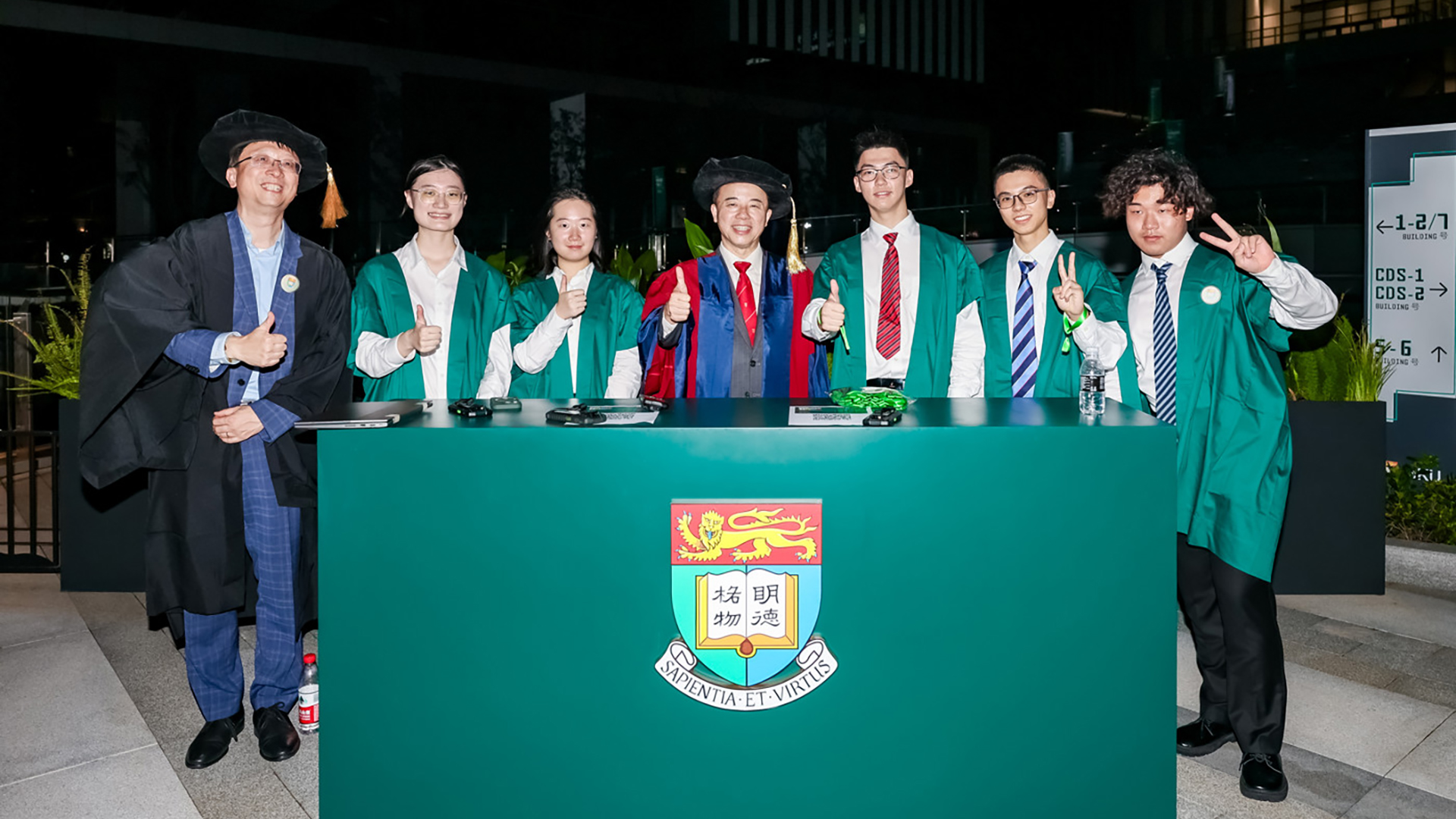
That audience included students and teachers from universities, primary and secondary schools in Hong Kong and Macao, researchers and technology professionals, as well as representatives from youth organisations. The ‘Tiangong Class’ Hong Kong and Macao Designated Session was held at Dr Lai’s alma mater, Tsuen Wan Public Ho Chuen Yiu Memorial College. At HKU, the ‘Tiangong Class’ was streamed live into Sun Yat-sen Place on the Main Campus.
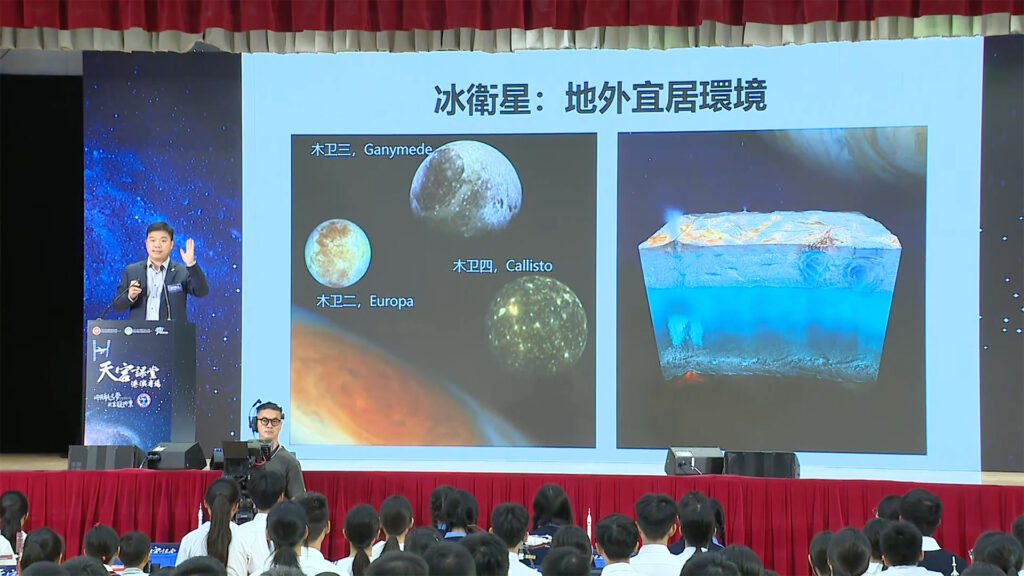
Aerospace experts were also invited to participate in the lectures. Among them was Professor Zhonghua Yao, Director of the Laboratory for Space Research at HKU, who has participated in major national missions, including Tianwen-1, Tianwen-2, Tianwen-4, and Chang’e 8. “The space environment is permeated by various invisible, high-energy charged particles that pose significant threats to both our astronauts and space infrastructure,” Professor Yao noted. “Similar processes also occur on other celestial bodies within our solar system. Among the planets, Jupiter stands out as the largest – often referred to as the king of planets – possessing the greatest mass, the largest volume, and the strongest magnetic field, which together create the most extreme space environment. It also presents the most rigorous challenges for all space missions.”
The astronauts took the viewers through some science experiments that would seem basic on Earth but yield completely different results in space – such as playing table tennis with water droplets and a cloth-wrapped paddle and wringing the water out of a wet towel (spoiler alert: you can’t!).
In terms of the space mission itself, Dr Lai talked about Hong Kong’s first scientific payload on the space station, the Multi-Spectral Imaging Carbon Observatory, and explained its importance in helping to monitor global greenhouse gases like carbon dioxide and methane emissions from space.
Those whose curiosity was more directed to the more everyday aspects of life in space would have been delighted when Dr Lai demonstrated how she kept herself fit on a space treadmill using a harness and elastic bands and took the audience on a virtual tour of her living quarters. She introduced them to their daily dining and cooking options – discussing the menu in some detail (there was black pepper beef tenderloin and even the classic Buddha Jumps Over the Wall) – and walked them through the space-garden where the crew grew vegetables to eat, such as mint, kale and lettuce.
Students also jumped at the opportunity to ask the astronauts questions. A fourth-year HKU student was curious as to why Dr Lai gave up a stable professional career to apply for the national payload specialist selection and how she found the courage to try something completely different.
Dr Li admitted that she didn’t always dream of becoming an astronaut, and said it was a difficult decision. “I could temporarily put my work aside, but I have three young children at home. At that time, I thought, if I were selected, I might not be able to be with them for several years, which made me quite anxious,” she recalls. However, after discussing everything in detail with her family, they fully supported her, so she decided to go ahead and apply.
“I also felt that such a rare opportunity should be seized,” she says. “Looking back now, I realise that my educational background, scientific training, and work experience were crucial factors that enabled me to grasp this opportunity.”
Dr Lai holds three degrees from HKU: a Bachelor of Science in Computer Science and Information Systems, an MPhil, and a PhD (Computer Science). She completed her master’s degree in cryptography, and worked under the guidance of her doctoral supervisor, Dr Chow Kam-pui from the School of Computing and Data Science, on computer forensics research.
“Many might wonder: what does computer forensics have to do with space exploration? I can tell you: nothing directly,” admits Dr Chow. “But the skills required for forensic work – focus, patience, meticulousness, professional judgment, and the ability to work independently – are exactly the qualities astronauts need.” Furthermore, today’s space missions rely heavily on complex algorithms and massive data processing, which is precisely what Dr Lai’s computer science background provides.
“Her success did not happen overnight,” he added. “She spent 10 years at the University of Hong Kong, from undergraduate to doctoral studies, cultivating rigorous analytical skills and the courage to challenge herself. Facing the extreme pressures of space training, she stood out with her calmness and resilience.”
Dr Lai echoed these sentiments, urging students to think of the long-term possibilities while also diligently preparing themselves every day, so that when an opportunity presents itself, they will be ready. “Be brave and proactive in pursuing it!”
Dr Lai’s achievements demonstrate how HKU empowers its graduates to take their skills and knowledge into uncharted territory, and that HKU’s academic excellence translates from both real life and the laboratory to the final frontier of space. The University looks forward to learning of more stellar accomplishments and discoveries by the Shenzhou-23 crew as their mission continues.
(Image courtesy of ‘Tiangong Class’ Hong Kong and Macao Designated Session)
(Image courtesy of ‘Tiangong Class’ Hong Kong and Macao Designated Session)