Hong Kong is renowned as an international financial centre, but did you know that it is also poised to become a premier global hub for the emerging space economy and astrophysics research?
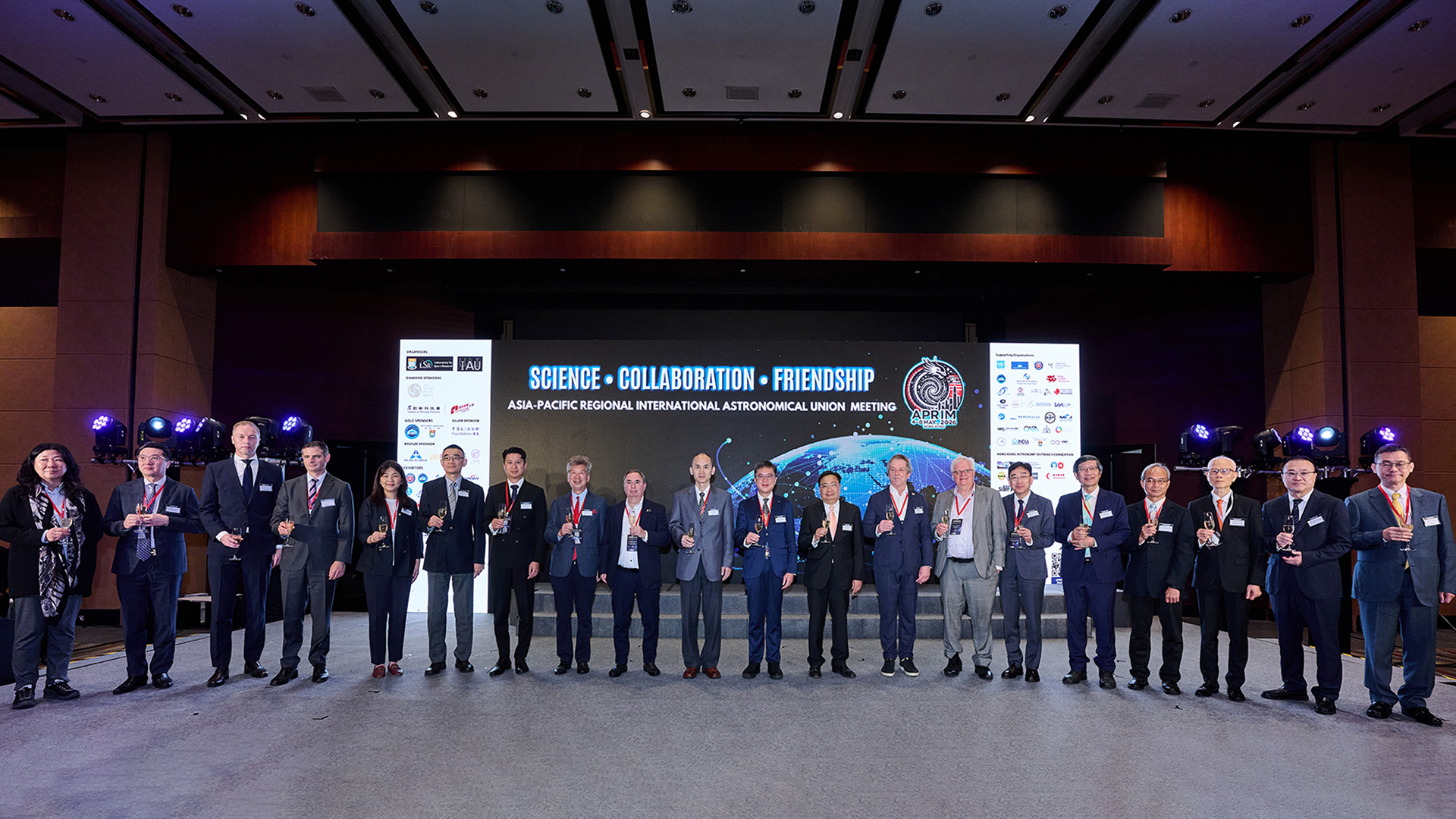
HKU’s Laboratory for Space Research (LSR) certainly has its finger on the pulse of these exciting developments and is playing an active role in realising these aspirations – hosting the 16th Asia-Pacific Regional International Astronomical Union Meeting (APRIM 2026) at the Hong Kong Convention and Exhibition Centre from May 4 to 8, which marked the first time this flagship International Astronomical Union (IAU) event has been held in the city.
Held every three years, the APRIM, dubbed ‘The Olympics of Astrophysics and Space Science’, is one of the most prestigious gatherings in the field of global astronomy, bringing together leading scientists, policymakers, and industry players to explore developments in astrophysics, deep space exploration, and the emerging space economy. APRIM 2026 convened nearly 600 leading scholars from more than 40 countries and regions, making it the largest astronomical conference ever held in Hong Kong.
With the theme ‘Science, Cooperation and Friendship – Working Together Across the Asia-Pacific Region within the IAU Framework’, APRIM 2026 featured dedicated sessions to explore space sustainability and frontier topics such as lunar bases. The programme included a comprehensive agenda, with discussions ranging from black holes and exoplanets to orbital debris and the expanding space economy.
At the opening ceremony, Mr Kevin Choi Kit-ming, Permanent Secretary for Innovation, Technology and Industry, noted that China has set a visionary strategic direction, and it is accelerating the journey towards becoming a global aerospace powerhouse. The National 15th Five-Year Plan shows unwavering support for Hong Kong’s development into an international innovation and technology centre. The Innovation and Technology Support Programme supported by the Innovation and Technology Commission has launched the Special Call on Aerospace Technology, allocating over HK$100 million to support six flagship research and development projects. This includes the ‘Low Cost Cislunar (earth to moon) Transportation and Lunar Flash Observation’ project led by Professor Quentin Parker, Director of the LSR, with funding of over HK$33 million.
Also instigator and Chair of APRIM 2026, Professor Parker highlighted Hong Kong’s unique advantages as an emerging global hub for space sustainability, citing strengths in common law, fintech, international connectivity, and intellectual property protection. “Hosting APRIM 2026 – a major astronomical event – offers the city a vital opportunity to capitalise on the booming global space economy, align with the new national strategy of building an ‘aerospace powerhouse’, and integrate with international development trends,” he said. “As the global space sector transitions from pure scientific research to commercial industry, Hong Kong is perfectly positioned to turn this vision into tangible, transformative results.”
The event’s impact extended beyond the main sessions, with a parallel meeting on space sustainability to address urgent global challenges including space debris management, LEO satellite constellation planning, light pollution, orbital governance, and long-term lunar base operations. The education and outreach initiative through the ‘Hong Kong Astronomy Outreach Convention’ also offered free STEM-focussed activities to over 1,000 schools, bringing world-class space science to the local community.
A special highlight of APRIM 2026 was an exclusive dinner reception honouring top international scientists and distinguished stakeholders. The gathering featured a stunning HK$1 million art installation created specifically for the event by renowned artist Bingyi. During the dinner, it was officially announced that Bingyi would be the inaugural artist-in-residence for the LSR and will create a unique piece of artwork to reflect and celebrate every new space mission.
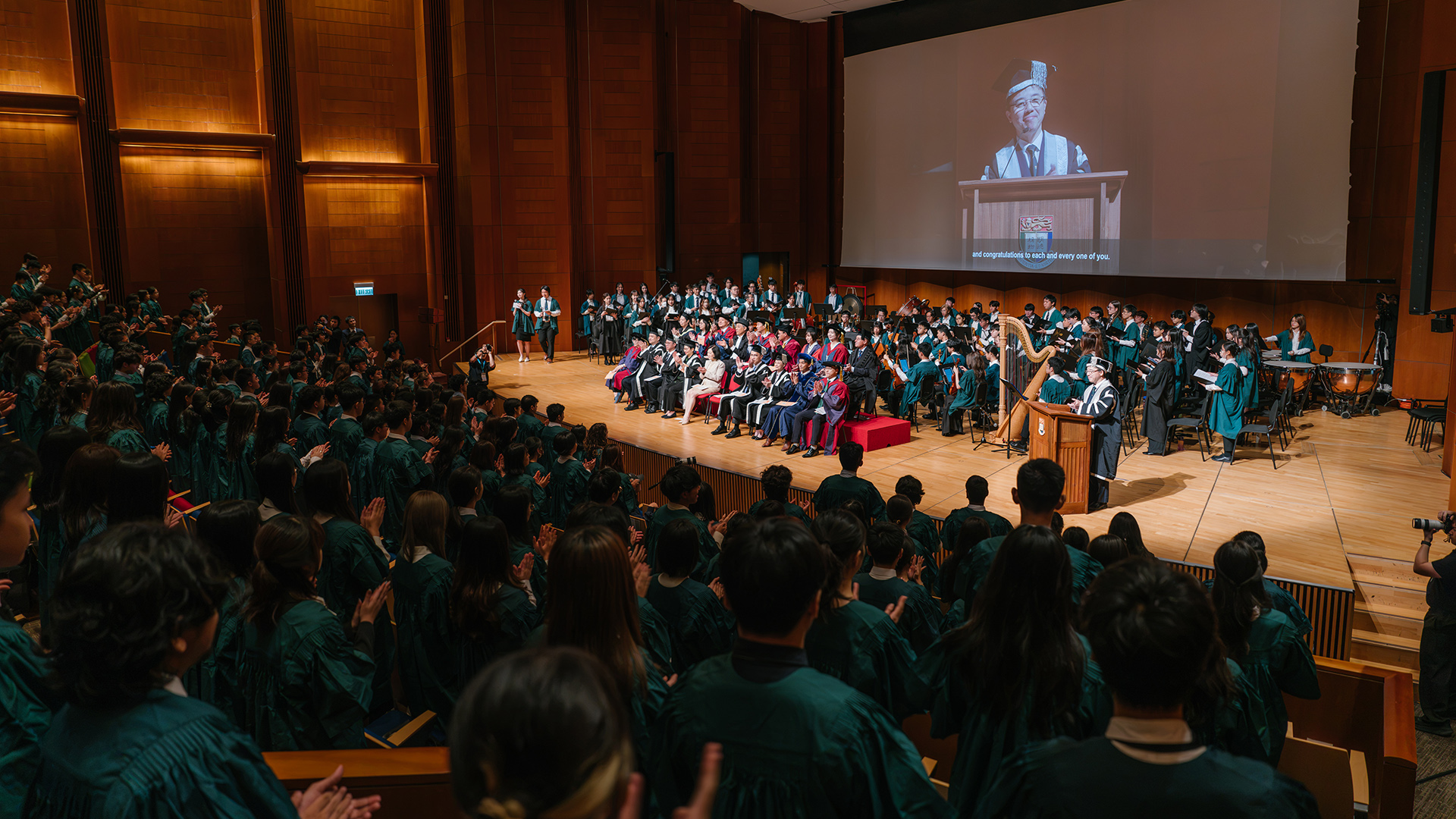
As part of the APRIM 2026, a spectacular classical music concert ‘La Symphonie de l’Universe’ was held at the Grand Hall at HKU on May 7. The concert featured an original 10-movement symphony by award-winning composer Shirley Choi. The performance was brought to life by a unique orchestra of able and disabled musicians from the Hong Kong Arts Without Boundaries Foundation, with all profits from ticket sales going towards the support of the Foundation’s mission.
The hosting of APRIM 2026 by the LSR reflects the University’s commitment to advancing frontier research, fostering global partnerships, and supporting Hong Kong’s role in the new space economy and international space research.