Hong Kong is home to incredible marine biodiversity. It has over 6,000 marine species, more than a quarter of China’s total species count, in less than 0.03% of the country’s sea area.
“Before starting my PhD at HKU, I did research in Baja California, the Maldives, in pristine places, compared to Hong Kong. There were incredible marine species all around you. When I came to Hong Kong, I was amazed to see great biodiversity, but in such a small area, and next to millions of people,” says Maxine Cutracci, PhD student at the Swire Institute of Marine Science at HKU’s Faculty of Science.
Maxine is studying an overlooked, but extremely important part of our marine biodiversity: cryptobenthic fish. ‘Cryptobenthic’ comes from Greek, and the term ‘cryptobenthic fish’ means ‘secret fish at the bottom of the sea’.
Cryptobenthic fish are a far cry from large charismatic marine animals, like sharks or dolphins, that we see marine biologists studying in documentaries.
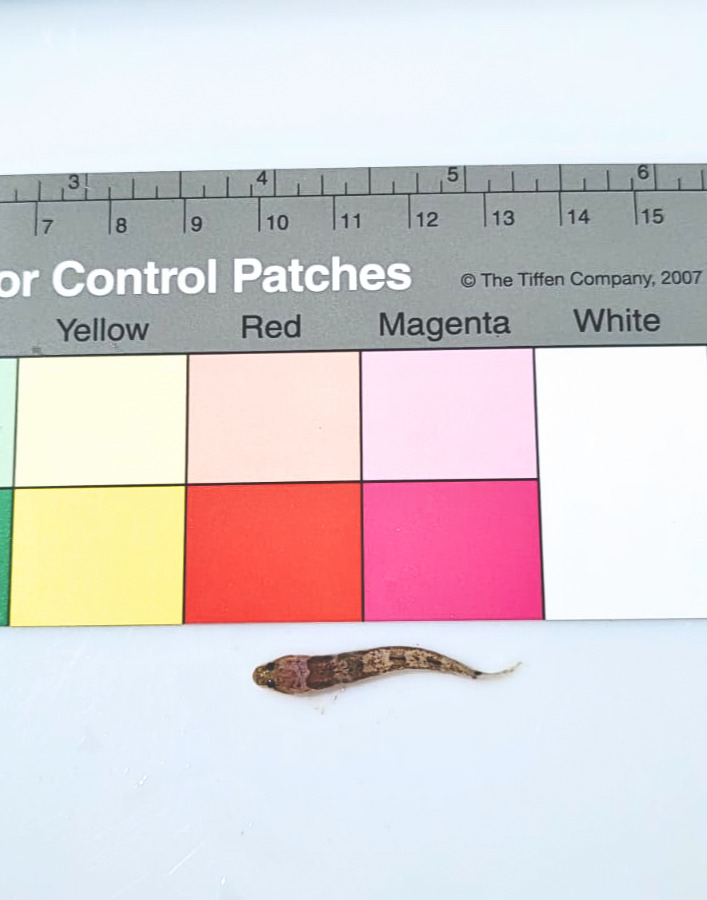
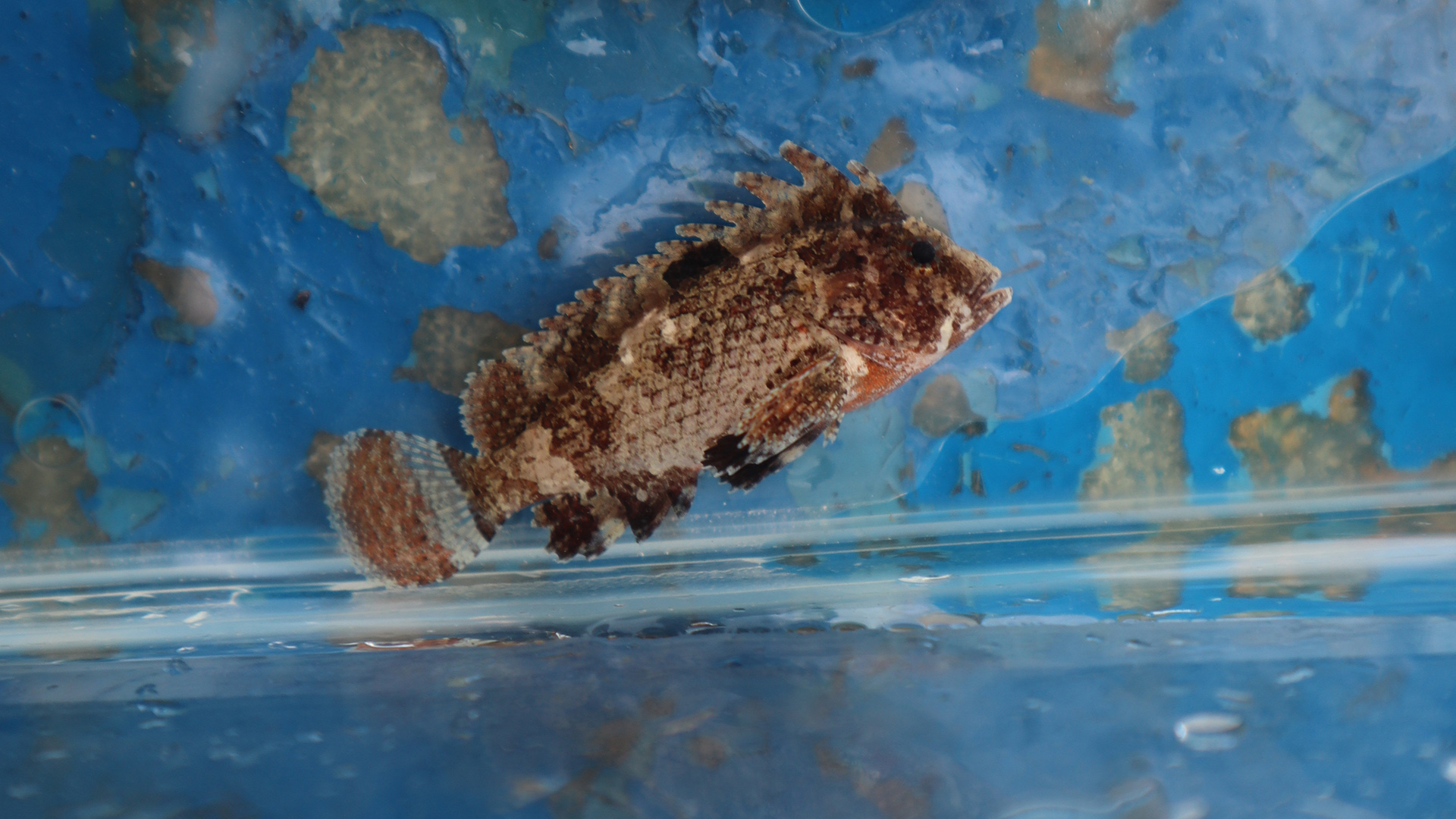
First, cryptobenthic fish are very small, the largest ones are about the length of two matchsticks, and they spend a lot of their time hiding. Many are the colour of mud. Most of us have seen them – they are the tiny fish that you can glimpse from a pier, darting around the bottom of a harbour.
Yet, despite being extremely common, cryptobenthic fish remain understudied. For example, a very common species, Hong Kong frillgoby (Bathygobius hongkongensis) was only described as recently as 1986.
Why study these tiny fish? “Cryptobenthic fish feed on microscopic algae, plankton and invertebrates, converting them into fish biomass – food that larger predators, and eventually humans, rely on,” says Professor Celia Schunter, the Principal Investigator of this project. “Scientists used to be baffled by how the teeming-with-life coral reefs survive in nutrient-poor tropical waters. Cryptobenthic fish are the rapid-recycling engine that makes this possible.”
Maxine notes that cryptobenthic fish in urbanised marine environments, such as Hong Kong, is a particularly under-researched area. “There have been studies on coral reefs in places like the remote Pacific Islands, but nothing on urbanised coastal ecosystems, which is what a lot of coastal seas are like now, and where most of the world’s population lives,” she says.
Working under the supervision of Professor Schunter over the past three years, Maxine has been surveying cryptobenthic fish communities across Hong Kong, noting both the number of species and their abundance. The fish were collected at six sites that formed a pollution gradient – Gold Coast, North Lantau, Discovery Bay, Cheung Sha Beach, South Bay and Tai Tam. Gold Coast was the most degraded site, where the pollution was the most severe.
The team used two methods. The traditional one relied on diving. “It was very hard, sometimes the visibility was less than one metre,” says Maxine. Divers would set up a transect on the seabed to identify a particular area for investigating, and then place quadrats – a rectangular metal frame with a sack attached – along the transect. Clove oil was released unto the quadrat to anaesthetise the fish, which would then float into the sack.
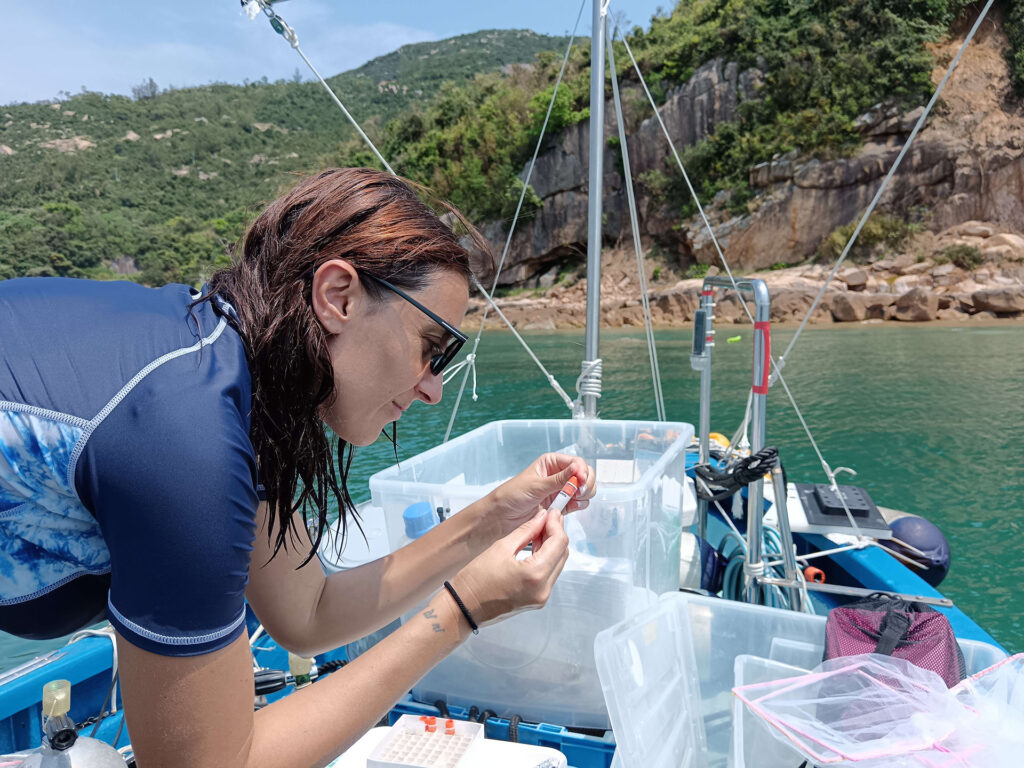
The second method used environmental DNA (eDNA), where the fish were detected from the fragments of the DNA they shed into the water. “The eDNA method allows us to see which species are present without collecting or harming the fish. All we needed to do was to scoop around six litres of seawater at each location,” explains Maxine.
The eDNA approach turned out to be more effective than physical sampling. “We found 60 species of cryptobenthic fish in total, of which 57 we detected with eDNA and 17 we collected physically,” says Maxine.
Sixty is a remarkable number of species, similar to what has been found in pristine coral reefs of Indonesia and Australia. However, Maxine emphasised that there was a difference. “In Hong Kong, the cryptobenthic fish community is dominated by a few species – a sign of anthropogenic pressure. We may have a lot of biodiversity here, but the abundance of many species is very low,” she notes.
A very important, and surprising, finding was that the more degraded the site, and the higher the pollution, the more cryptobenthic fish it supported – both in number and in species. “In some non-degraded sites, we would find only five fish in a sample; in degraded sites, we could find as many as 50.”
Maxine suggests that the ready availability of food may be one reason. “Many cryptobenthic fish feed on detritus – tiny particles of organic matter,” she said. “Degraded sites tend to have higher water turbidity, which means there may be more of these particles for the fish to eat.”
Another reason may be lack of predators, as the larger fish are gone from the highly impacted sites. The role of predators is a possible future research direction, says Maxine. Another research avenue that she would like to pursue is finding the genetic basis of the adaptations of cryptobenthic fish to pollution. “We can put a fish in a tank, increase nitrate levels and see how gene expression changes.”
Maxine adds that knowledge of how cryptobenthic fish communities change with human impact on their environment has direct practical applications. It can give us a tool to assess the status of degraded, urbanised marine environments, such as harbours. In such environments many of what is known as indicator species that scientists rely on to make conclusions about the health of the environment have disappeared. But cryptobenthic fish are present and can provide us with similar information.
“First, we use eDNA to determine which cryptobenthic fish species are there. Since we know the pollution tolerance of these species, their presence can give us a picture of the conditions of the site.”
Maxine says that she would like to see this study extended worldwide, especially to Asia and Africa. The knowledge of cryptobenthic fish will provide us with baseline data to better understand how marine biodiversity is changing.
“Human populations are increasing and the world is urbanising,” she says. “We need to know the biodiversity of urbanised marine environments. This is the only way we will know what we are losing, and become able to protect it.”