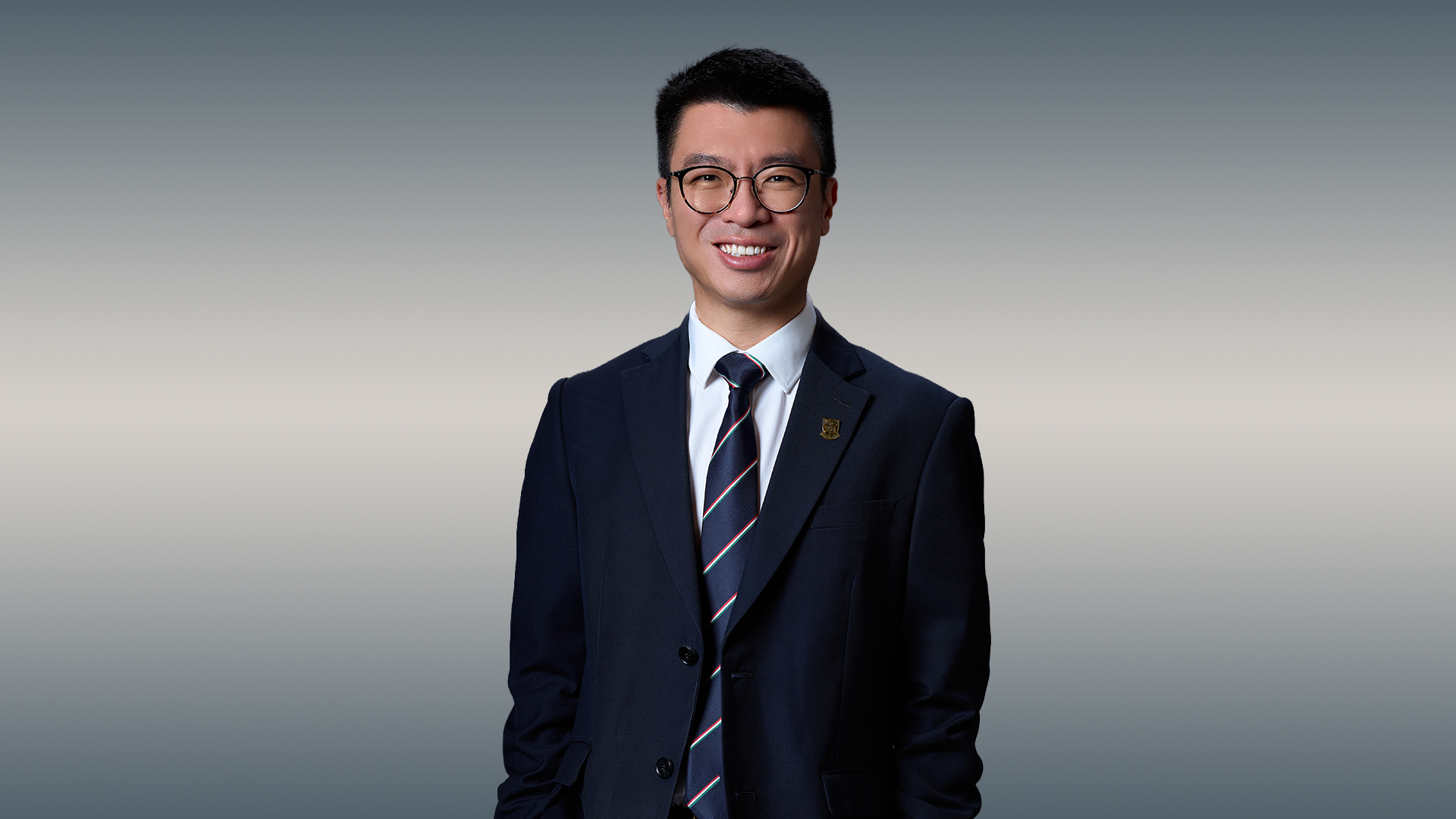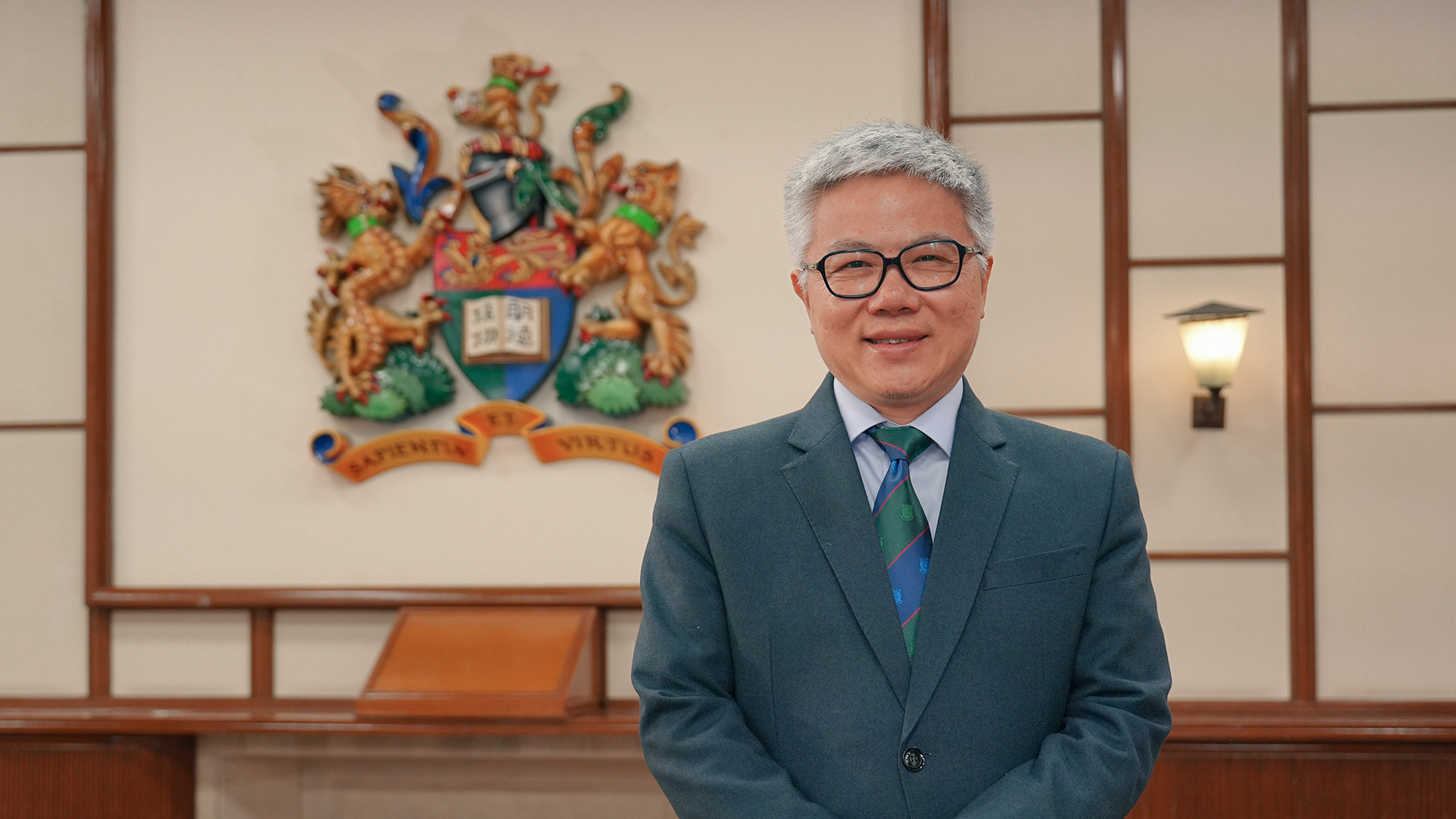
Joining HKU this June, Professor Ngô Bảo Châu is a distinguished mathematician who has dedicated his life to the discipline, received worldwide acclaim for his contributions to the field, and aspires to help build Asia into a new global nexus for mathematics.
His groundbreaking proof of the fundamental lemma in the Langlands Programme was a monumental achievement that solved a three-decade-old mathematical challenge. In 2010, Professor Ngô made history by becoming the first Vietnamese mathematician awarded the Fields Medal – mathematics’ highest honour for researchers under 40. Along with the Abel Prize, these awards are widely regarded as the discipline’s equivalent of the Nobel Prize. His transformative contributions to number theory and representation theory have had far-reaching implications across mathematical physics.
Q: Where did your love of mathematics come from? Were you always good at it, even when you were young?
A: I had great fun in elementary school, but when I tried to get into a school of mathematics after sixth grade, I failed the entrance exam. That upset me very much. However, both my parents were academics, and my father was actually an applied mathematician. So they got me some books with lots of mathematics problems to work on and I studied very hard to try to solve them. At first, it was very hard for me. I had to really work at it, but gradually I felt myself getting better. Eventually, I found that I could solve more and more problems, and that was a very gratifying feeling, and very motivating.
Q: How much of an influence was your father on you? Does your aptitude in mathematics come from him?
A: Both my parents were very intellectual, and even though it was a tough historical period for Vietnam, I was very lucky to have had a healthy education when I was growing up. Their friends and students would come to the house for dinner and exchange ideas on different topics. I was very interested in those discussions.
My father didn’t actually teach me mathematics, but some of his students tutored me initially, to get me on track. When I was in high school, I was interested in mathematics more than anything else. I was pretty competitive, and as I became more proficient, I quite liked entering mathematics competitions. It gave me a lot of drive, and eventually after I had won two gold medals at the International Mathematical Olympiad (IMO), I got an opportunity to go to France and study mathematics.
Q: Can you help a layman understand the groundbreaking achievement in mathematics that won you international acclaim?
A: I would start with the Langlands Programme, which is a set of theoretical frameworks about connections between number theory and group theory, and was proposed by the Canadian mathematician Robert Langlands in 1967. He questioned if there was a way of seeing these branches of theory as two sides of the same coin, and proposed some strategies to prove them. He was not able to prove his conjectures himself, but left them open for future students to try to come up with the fundamental lemma to solve them. Good theorems depend and rely on the validity of the fundamental lemma.
When I was a PhD student, there was a new approach to the Langlands problem, the geometricisation of the programme. I was a part of that, and I worked to discover a geometric structure or shape that would explain the fundamental lemma and then allow me to prove it.
At some point I remember vividly, I just came up with some very simple and basic things about matrices, some very elementary statements – which I was surprised people didn’t see before. And with that I could actually reformulate the whole Langlands problem and the fundamental lemma in a new setting.
It allowed me to ask the questions that Langlands couldn’t ask because he didn’t have all these geometric shapes and structures in the game. That is probably my best contribution to mathematics so far – coming up with some very basic mathematical statements, rather elementary, that helped me reformulate Langlands problems in geometric terms.
Q: You’ve lived in Europe and the US for many years. Why did you decide to relocate?
A: I grew up in Vietnam, then spent 18 years in France studying, doing my PhD, and I got my first job there, as a young professor. Then I moved to the US – first I was at Princeton and then the University of Chicago. And then more recently, it just seemed like it might be the right time to move back to Asia, for both personal and professional reasons. The first is that my parents, though both in good health still, are getting on and I really wanted to spend some more time with them. And professionally, I started feeling that the future centres of science and mathematics will be in Asia.
Q: Presumably you had your pick of universities throughout Asia. What made you choose HKU?
A: I did get offers from a number of universities in the Chinese Mainland and Hong Kong, and when I started thinking seriously about it, Hong Kong seemed to be the best place. Firstly, I don’t speak Chinese, and it seemed easier to live in Hong Kong.
HKU has a very good Department of Mathematics. Some of my colleagues here are really very well-known world-class mathematicians. Of course the Department is kind of small compared to peer institutions, but the HKU leadership has reassured me that they have a mission to grow the Department to become a world-class centre of mathematics. I am really eager to be part of that effort.
I also want to develop more bonds with peers in mathematics right across Asia, from India to Japan. Because we know that mathematics really develops when there’s a chance for ideas to be exchanged and challenged among mathematicians, both young and established.
Q: Do you have any ideas for developing mathematics at HKU?
A: Things are very much in the planning stage still, but I’m glad to know that I have the support of the Department of Mathematics and the University’s leadership.
I want to run year-long seminars for undergraduate and graduate students together. I believe that mathematics is best learned when students have a chance to interact, with the older ones teaching the younger ones. And the subject could range from very fundamental basic questions to issues in the most updated papers. So constant learning, doing research by learning, and learning by doing research. I would combine my own research with interacting with students in seminars or individually, one-on-one.
I also plan to invite a great many guest speakers from abroad – from the US, Europe, and Asia – to come to HKU to deliver lectures and seminars. So that will give students a lot of opportunities to interact with what is being done at the leading edge of research.
The University also has a plan to build a new institute for mathematics and of course I want to be involved in that. For me, it will be very much tuned to the Asian vision I mentioned. Of course it will be inclusive and international, but there is also an opportunity to build up Asia as a new, promising land of opportunity for science and mathematics, and this institute for mathematics at HKU could really become a nexus of the Asian network of mathematics.
Q: Where does AI fit into your work as a mathematician?
A: I suppose many people fear that AI will replace them, but as far as I’m concerned, AI is still very far from being able to replace mathematicians.
But it is certainly a great help. We study better, we study faster, and that is a valuable thing when you’re conducting experiments. Instead of doing calculations in your head or on paper that could take weeks or months, AI can help us do that calculation in a couple of days, because basically, it has scanned all the mathematical resources in store and can propose calculations that could be helpful. Sometimes it’s pure nonsense, but luckily sometimes, it can give us ideas. So AI is really a great assistant for me.
Students can benefit a lot from AI to find the right source of knowledge, the right papers, or the right books to read. They don’t have to rely on professors anymore for locating the source knowledge. When I was young, when I had a question, I had to go to my advisors and ask, “Where I can find information about this or that?” And because they’d already read the whole library, they could say, “Go to this book and open such and such a page.” I was very impressed! But then, Google came along, and now we also have AI – it’s very efficient for that. AI is very good at making suggestions. But then my students and I, we have to make sense of these suggestions, and decide how to develop them and where to go with them.
In fact, I believe the best way to communicate mathematics is still for teachers to stand in front of chalkboards, writing out equations with chalk. There’s a kind of chemistry that happens in that setting that doesn’t happen when you use Powerpoint or whatever. In fact, if you go to any department of mathematics anywhere in the world, students seem to consistently prefer blackboards and chalk – they’re in classrooms, corridors, lounges, everywhere!
Q: For many people, mathematics is seen as an abstract subject. But it has an impact on many fields. How do you think mathematicians can help address real-world challenges?
A: I think that a good mathematician should make a real effort to bring mathematics to kids. I really believe that mathematics is an essential part of being human, the way we can make sense of an increasingly complicated world. AI can help predict some things, and sometimes it works very well, but sometimes it gets things deadly wrong.
The need to understand and make sense of things is a part of human nature. And although some people may think mathematics is very complicated, to me, it’s actually the most human part. The way that we make sense of the world.
So for instance, say you want to understand why there are tides in the seas and how waves form, or how airplanes can fly. Of course these are more questions of physics, but physics needs mathematics. The physicist, their work is to model what you see in terms of some mathematical equations, but you need to understand the mathematical structures in the first place. And if you have been taught mathematical concepts, you could make some basic calculations. And then maybe some other questions would arise, and then you want to understand those – and that’s how mathematics continues and our understanding of the world becomes stronger and richer.