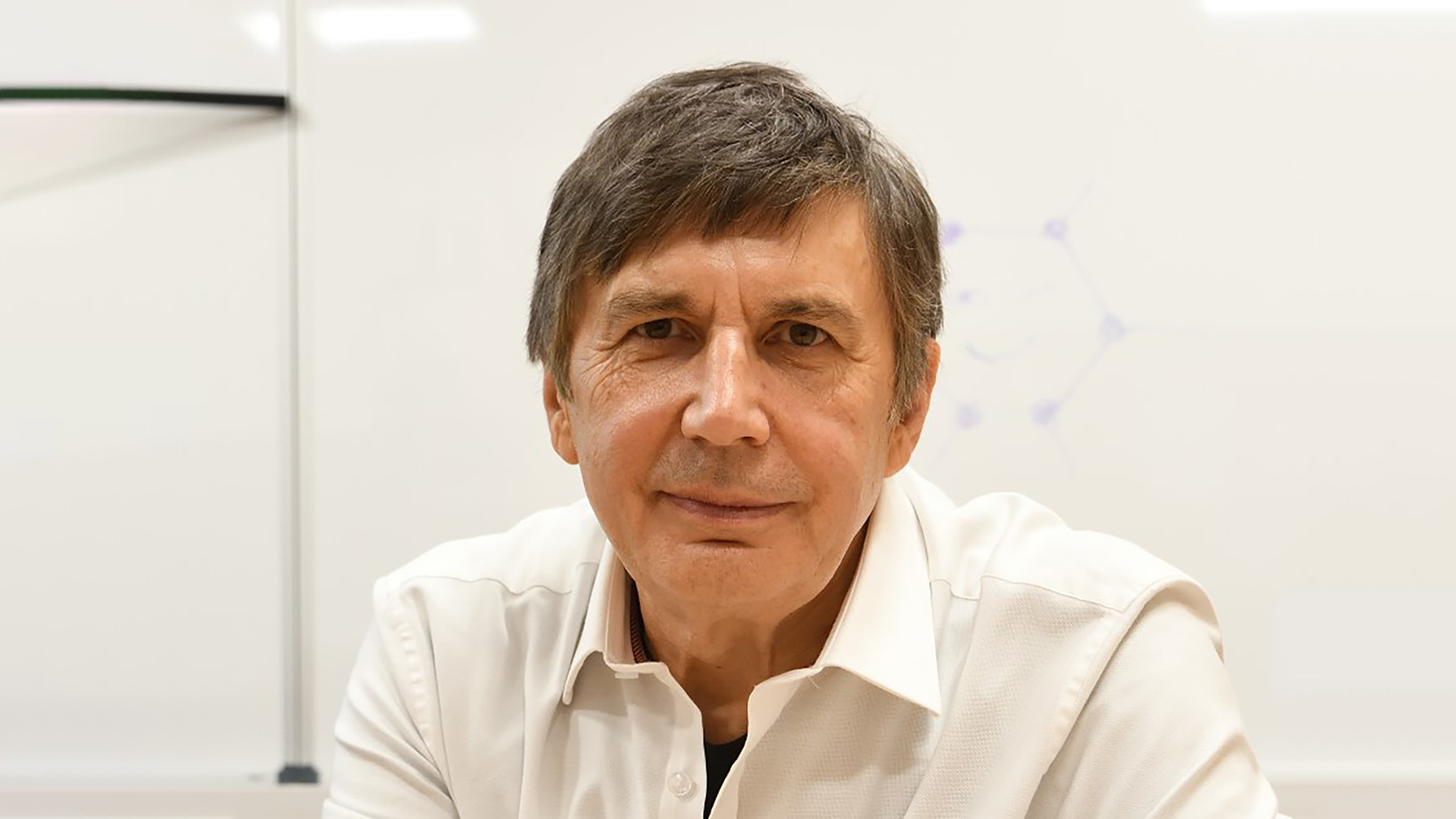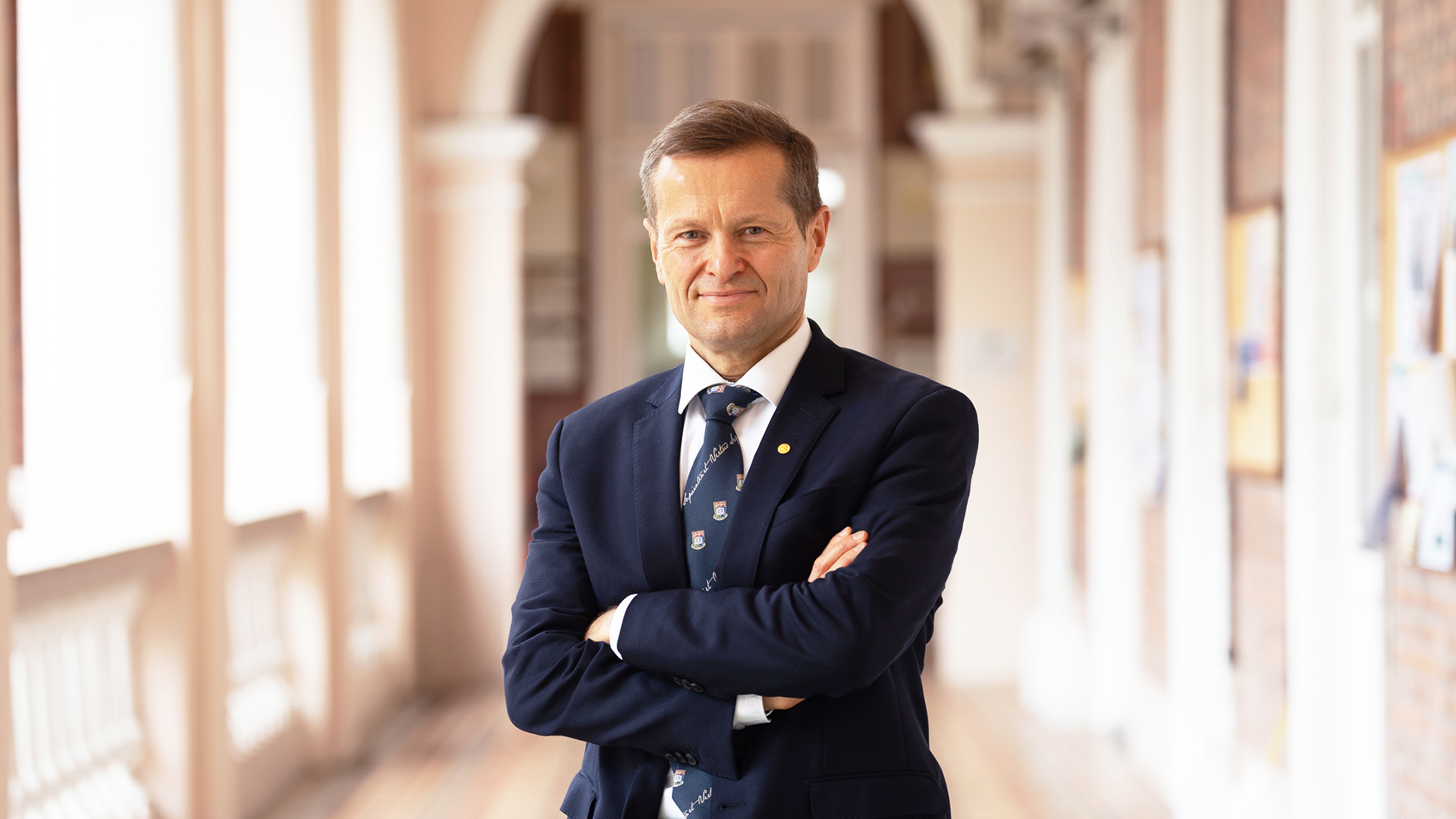
In November, the University welcomed Professor Ferenc Krausz, 2023 Nobel Laureate in Physics, as Professor, Chair of Laser Physics in the Faculty of Science. A luminary in ultrafast laser science and quantum optics, Professor Krausz’s arrival brings new dimensions to HKU’s research excellence and its global leadership in upstream research, while also pioneering new interdisciplinary frontiers through international collaborations.
Q: You’re working at the cutting-edge of physics today. How did you get interested in the discipline?
A: It started in grammar school, actually. I had a teacher who taught us physics in a way that made it fascinating for me. This continued into high school where I became interested in exploring the mysteries of nature, and then natural sciences, and then a refocussing onto physics. I have learnt to appreciate its conceptual simplicity. It teaches us that the complexity of our world – from our life choices to complicated technologies – can be basically understood in terms of a few fundamental laws. Those fundamental laws govern everything that is happening around us. Having said that, I sometimes wonder if I might have led the life of an archaeologist, since that is also dealing with a different kind of minutiae: examining details of built environments with modern physical technologies to figure out how people lived thousands of years ago. Or perhaps even a cosmologist, since that’s a fascinating field of physics that deals with space and time on a monumental scale – the opposite end of what I’m working on now!
Q: Could you name a personal quality that is essential for scientists?
A: Dealing with failure. This is perhaps one of the most important abilities for a scientist, because research naturally consists dominantly of failures. Every so often, basically we get lucky and everything works, and what we plan to realise, explore, or discover – we indeed succeed in doing so. This typically happens once out of maybe a hundred attempts. The remaining something like 94 or in some cases 99 attempts are failures. I became able to manage these disappointments when I realised that failures are lessons too, and that what frequently happens is that it forces us to try something else, and that alternate route can actually lead us to a bigger discovery. So that’s what I try to communicate to all my team members. With each failure, we are getting better. This is the attitude that we must actually learn to develop in ourselves to be able to enjoy what we are doing. Because otherwise, we would be unhappy almost all the time! And that is certainly not the way to go.
Q: Was there a Eureka moment for you? Why did you succeed where others did not?
A: The discovery we made in 2001 actually began more than a decade earlier, around the beginning of the 1990s, when I was wondering whether we could possibly develop an experimental technique to make the fastest motions of electrons outside the atomic core directly accessible for observation. I found this question so fascinating and motivating, and I managed to persuade my small research group that we should start working on this in a highly focussed manner.
I should add that in science, every step we take in addressing a problem can reveal other new and exciting questions, and the potential to create new knowledge. It can be very tempting to start going down yet another rabbit hole, so being disciplined enough to stay focused on a very clearly phrased question and precisely defined goals is extremely important to be successful in science, as I guess also in other areas of life.
Q: The Nobel Prize brought you instant recognition on a global scale. How did handle that level of fame?
A: First of all, I have always said that the recognition is not about just me. I think it honours many people who have been part of my journey – my teachers in Hungary, the colleagues I had the privilege to work with in Vienna and Munich, my mentor Arnold Schmidt, and the many organisations and dedicated individuals who believed in our vision and supported our work.
In 2022, I established a charity organisation to support young people impacted by the war in Ukraine and have donated my prize money from the Nobel Prize and other awards to this cause. I have also been rallying support from the scientific community to fund education and extracurricular training for this young generation and provide sustained, ongoing support for their futures.
Q: You’ve been working at the frontiers of knowledge creation and honoured for your discoveries. What’s next?
A: Even as we were making these discoveries that involved the creation of new technical capabilities, we were asking the question: Is there possibly an application for it that could make a difference in people’s lives? And for the past ten years, our ambition has been to look into how these capabilities might enable us to improve our ability to protect human health.
This is where attosecond metrology comes in. For the past decade, we’ve been working to identify correlations between developing medical disorders and these changes in the molecular composition of human blood. Whenever this composition changes, for instance, due to the emergence of some disease, this is a signal that we can capture with attosecond methodology.
Q: Is this why you chose to join HKU?
A: There were many reasons to come to Hong Kong, but in my case, the main motivation was the truly outstanding healthcare system here and the world class medical experts at HKU. Because ultimately the grand goal is this: Can we transform healthcare from its current mode of operation to a new mode of operation, which can save many lives, improve the quality of life for many, save a lot of resources and make an important contribution to prosperity? And it became very obvious that one laboratory in one country would not be enough to take this forward. This would have to be a global initiative because the challenge is so big that we will have a realistic chance to master it only if the best in the world team up and join forces in the pursuit of this grand goal.
HKU is one of the best universities in the world, attracting top talent from across the region and internationally. We will not be successful in our research if we are not able to attract the best talent to join forces with us to jointly pursue our grand goals. So I very much look forward to setting up research activities in collaboration with my colleagues here, such as those at the HKU Clinical Trials Centre, together with research partners that I’ve been working closely with for many years in Hungary and Germany.
Q: Do you have specific goals that you want to achieve during your time at HKU?
A: Yes, we do have a specific goal. Our team has rolled out a study in Hungary with 15,000 participants and we intend to extend this to longitudinal cohort studies, each involving 15,000 participants in Hungary, Germany, and Hong Kong, allowing us to collect about 1 million blood samples from 45,000 participants in these studies over the next 10 years. These samples can be analysed using advanced technologies, including infrared fingerprinting. This data will help us develop a large-scale screening algorithm for prevalent chronic diseases like cancer and cardiovascular issues. Ultimately, we hope to advance preventive healthcare and enhance population health screening across the healthcare systems in these locations.