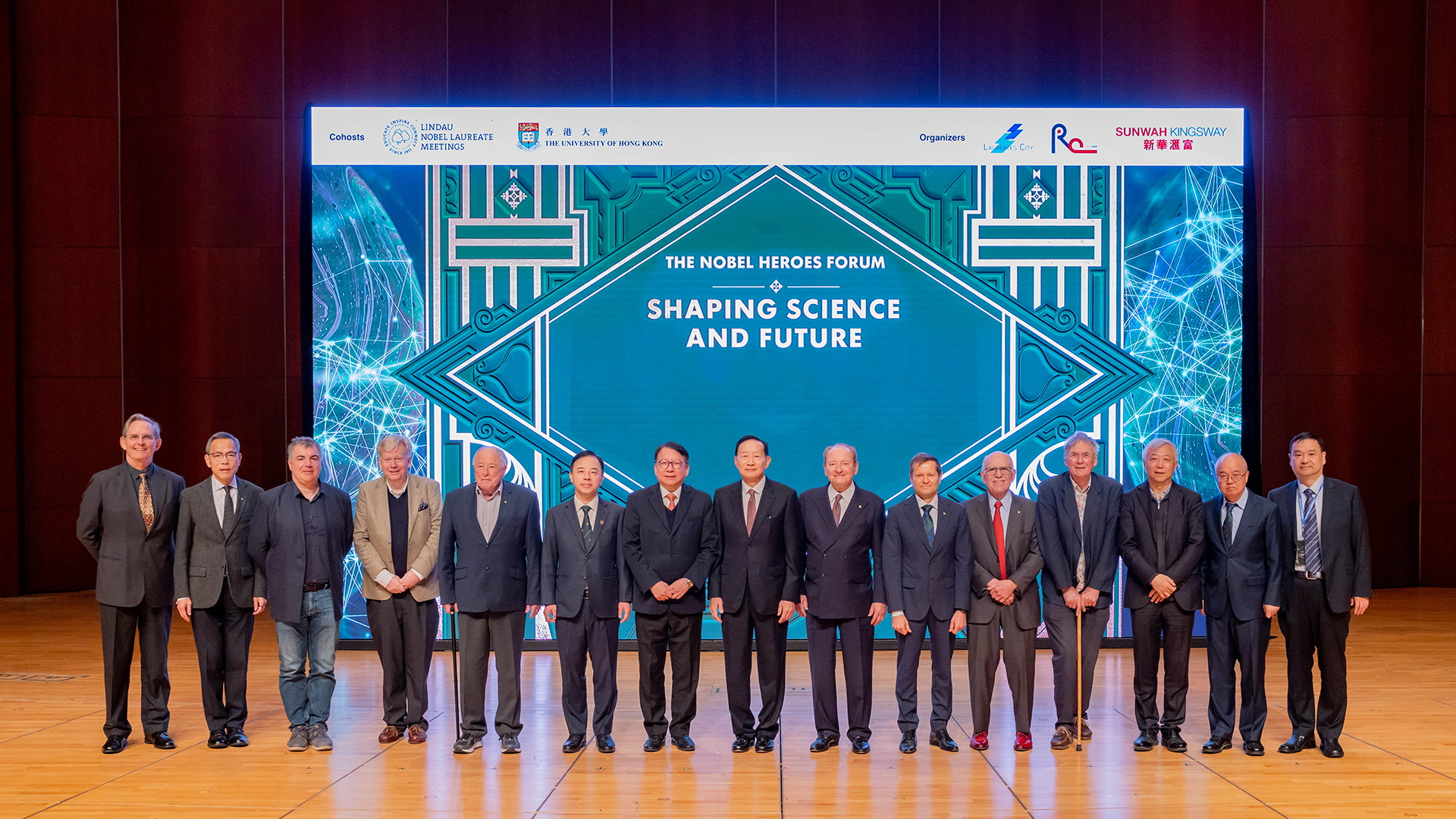
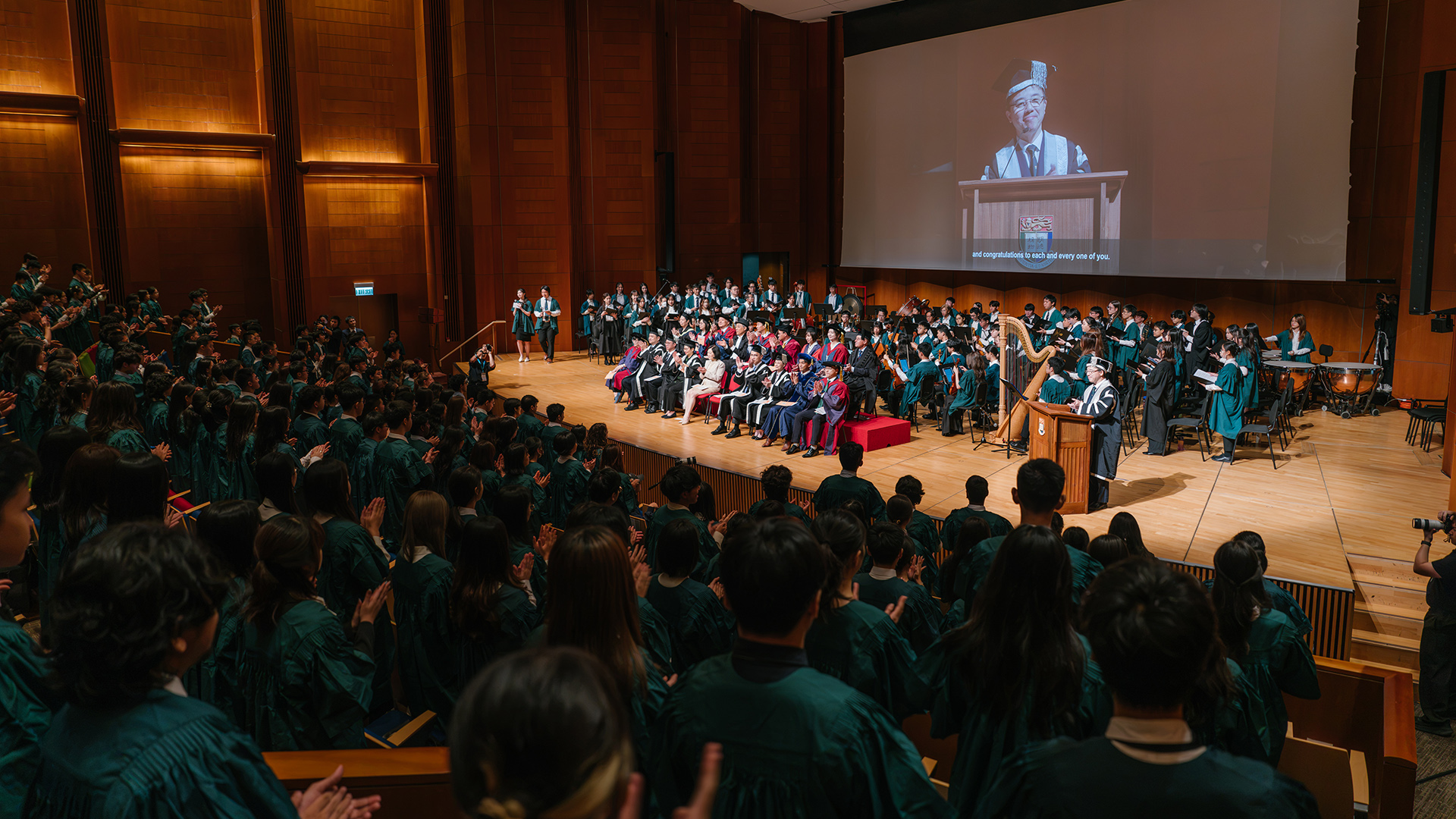
What would happen if six of the most brilliant minds in the world met for thought-provoking discussions on how fundamental research drives progress in science, technology, health, and the global economy? The answer came in the form of ‘The Nobel Heroes Forum: Shaping Science and Future’, co-hosted by HKU and Lindau Nobel Laureate Meetings on January 12, attracting the brightest of scholars and students like travellers to an intellectual North Star.
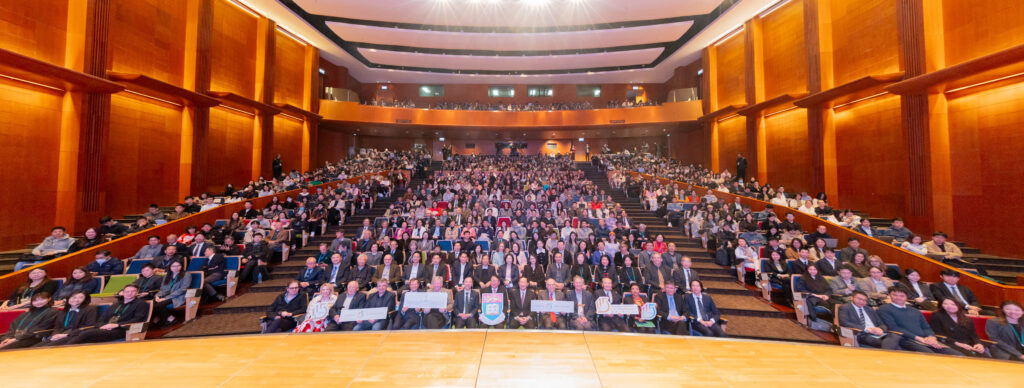
And although this convergence of Nobel laureates was just for a day, the extraordinary assembly of Nobel laureates drew an audience of over 800 participants, eager to witness an interdisciplinary exchange among some of the world’s most distinguished scientific minds.
Nobel laureates they had come to see included Professor Robert C Merton, Nobel Prize in Economic Sciences laureate (1997); Professor Louis J Ignarro, Nobel Prize in Physiology or Medicine laureate (1998); Professor Tim Hunt, Nobel Prize in Physiology or Medicine laureate (2001); Professor Kurt Wüthrich, Nobel Prize in Chemistry laureate (2002); Professor Konstantin Novoselov, Nobel Prize in Physics laureate (2010); and Professor Ferenc Krausz, Nobel Prize in Physics laureate (2023) and HKU Chair Professor of Laser Physics. Distinguished attendees included Professor Xiang Zhang, President and Vice-Chancellor of HKU; Dr Peter Wong, Chairman of the HKU Council; Mr Eric Chan Kwok-ki, Chief Secretary for Administration of the Government of the Hong Kong Special Administrative Region; Professor James Tang, Secretary-General of the University Grants Committee; and Mr Nikolaus Turner, Executive Director of the Lindau Nobel Laureate Meetings.
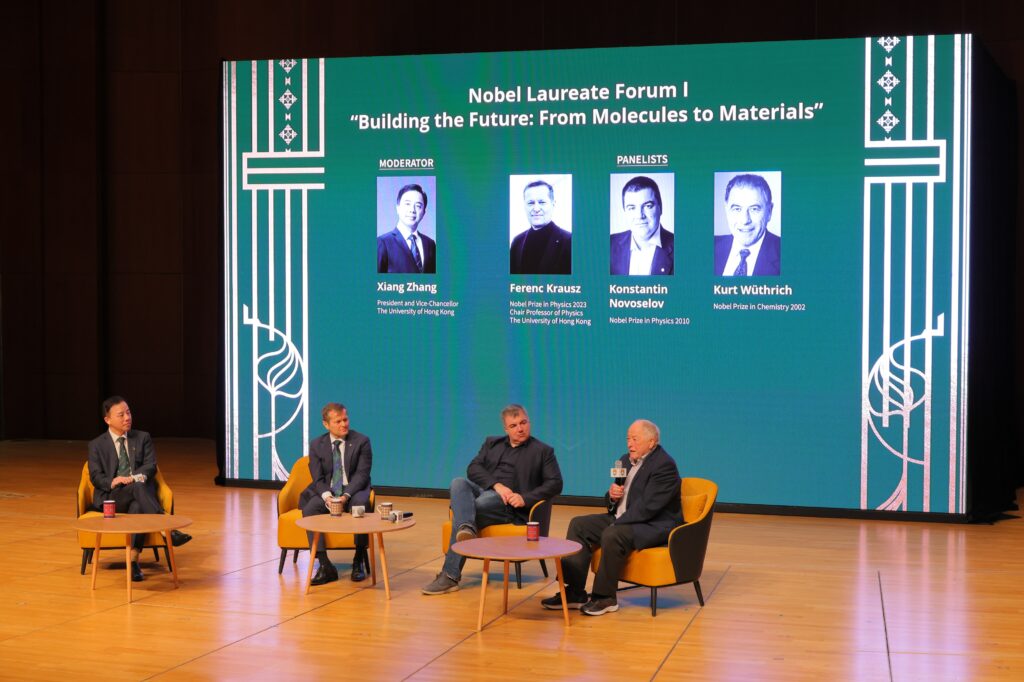
The forum featured two in-depth panel discussions moderated by HKU’s senior leadership. The first, ‘Building the Future: From Molecules to Materials’, was led by Professor Xiang Zhang and explored how fundamental discoveries in physics and chemistry unlocked new possibilities at the atomic and molecular levels. Panellists included Professors Krausz (Physics, 2023), Novoselov (Physics, 2010), and Wüthrich (Chemistry, 2002), who discussed topics ranging from visualising ultrafast atomic processes to engineering revolutionary materials with transformative applications.
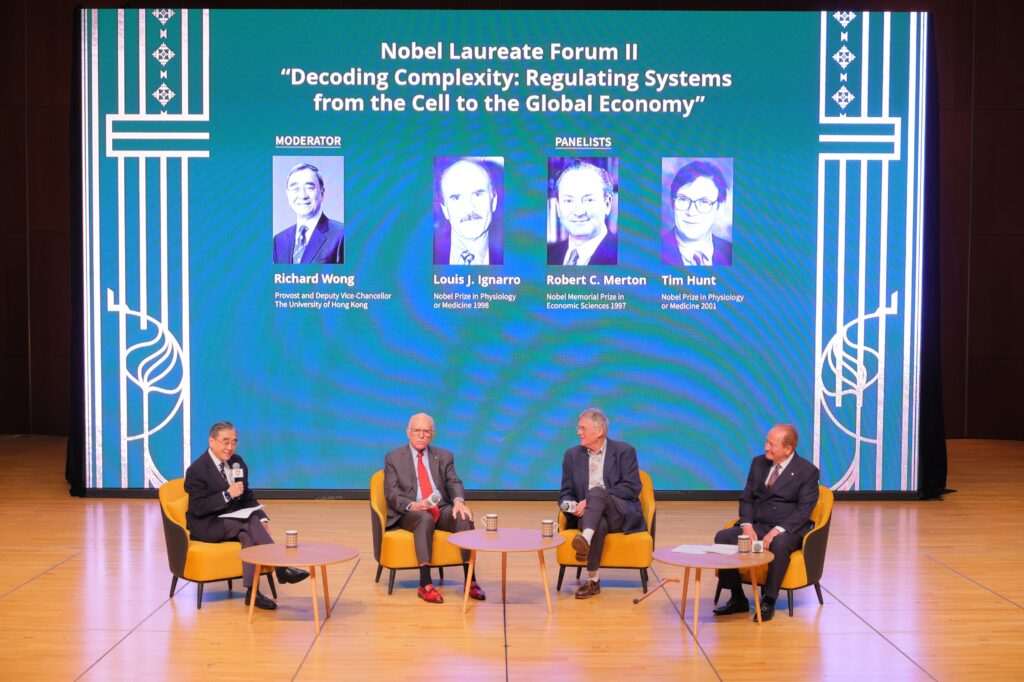
The second discussion, ‘Decoding Complexity: Regulating Systems from the Cell to the Global Economy’, moderated by Professor Richard Wong, HKU Provost and Deputy Vice-Chancellor, examined universal principles governing complex systems across biology and finance. Professors Ignarro (Physiology/Medicine, 1998), Merton (Economic Sciences, 1997), and Hunt (Physiology/Medicine, 2001) highlighted striking parallels in how feedback mechanisms maintain stability – whether in cellular processes or financial markets.
Professor Xiang Zhang noted that the Forum underscored HKU’s commitment to advancing knowledge for the betterment of society, while reinforcing the vital role of basic research in addressing global challenges. “In today’s world, working together in science to achieve shared goals and promote global prosperity is increasingly challenging,” he said. “We hope that, through the insights of six Nobel laureates, we can learn how to advance fundamental science, translate discoveries into practical applications, and benefit humanity, while navigating different challenges.”