The 80th anniversary of the end of World War II (WWII) this year has been marked by many ceremonies of remembrance internationally, including in Hong Kong. Yet how many local residents are actually familiar with the various historically significant military sites that are scattered across Hong Kong, or indeed know how to reach them?
Researchers from the HKU Department of Real Estate and Construction have been investigating the relics of the territory’s military pillboxes (PBs) and their access paths, which were constructed by both its defenders and invaders during WWII often with the help of indigenous villagers.
With support from the Public Policy Research Funding Scheme of the Government of the Hong Kong Special Administrative Region (HKSAR), the team found that many hill paths leading to these historical sites have disappeared for various reasons, thereby hindering access for prospective visitors.
These PB sites are good vantage points in the countryside and have a great potential for both drawing tourists interested in history and culture, and as educational resources.
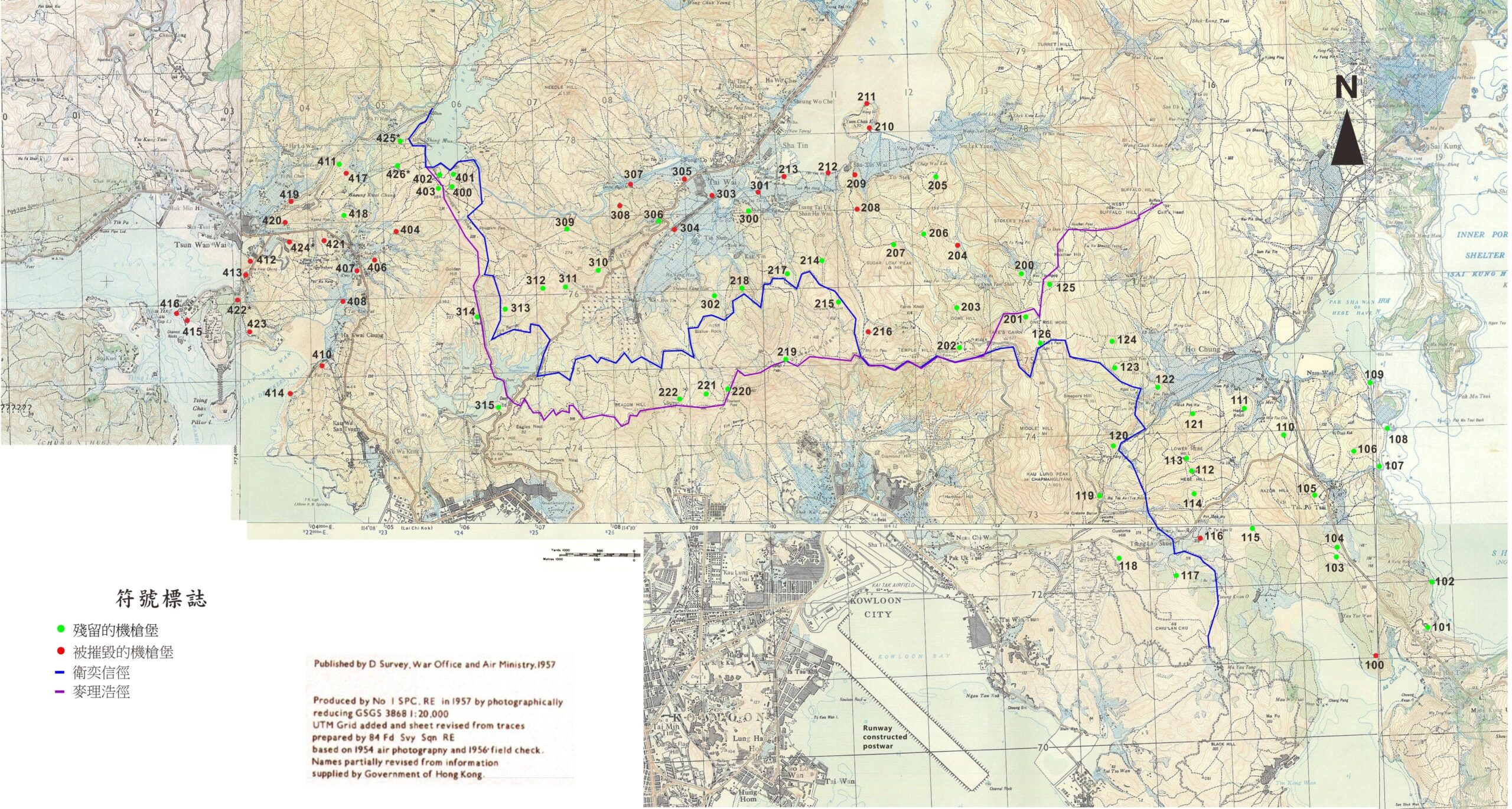
Hong Kong’s WWII PBs are over 85 years old and can be categorised into three types: the PBs along the Gin Drinker’s Line (GDL) (the defensive line built by the British against the Japanese invasion in the New Territories) comprising at least 93 identified PBs with 59 surviving in various degrees of post-war use or decay, PBs on Hong Kong Island built by local contractors for the British Army with only 24 remaining of the 93 that have been identified, and Japanese PBs in the New Territories.
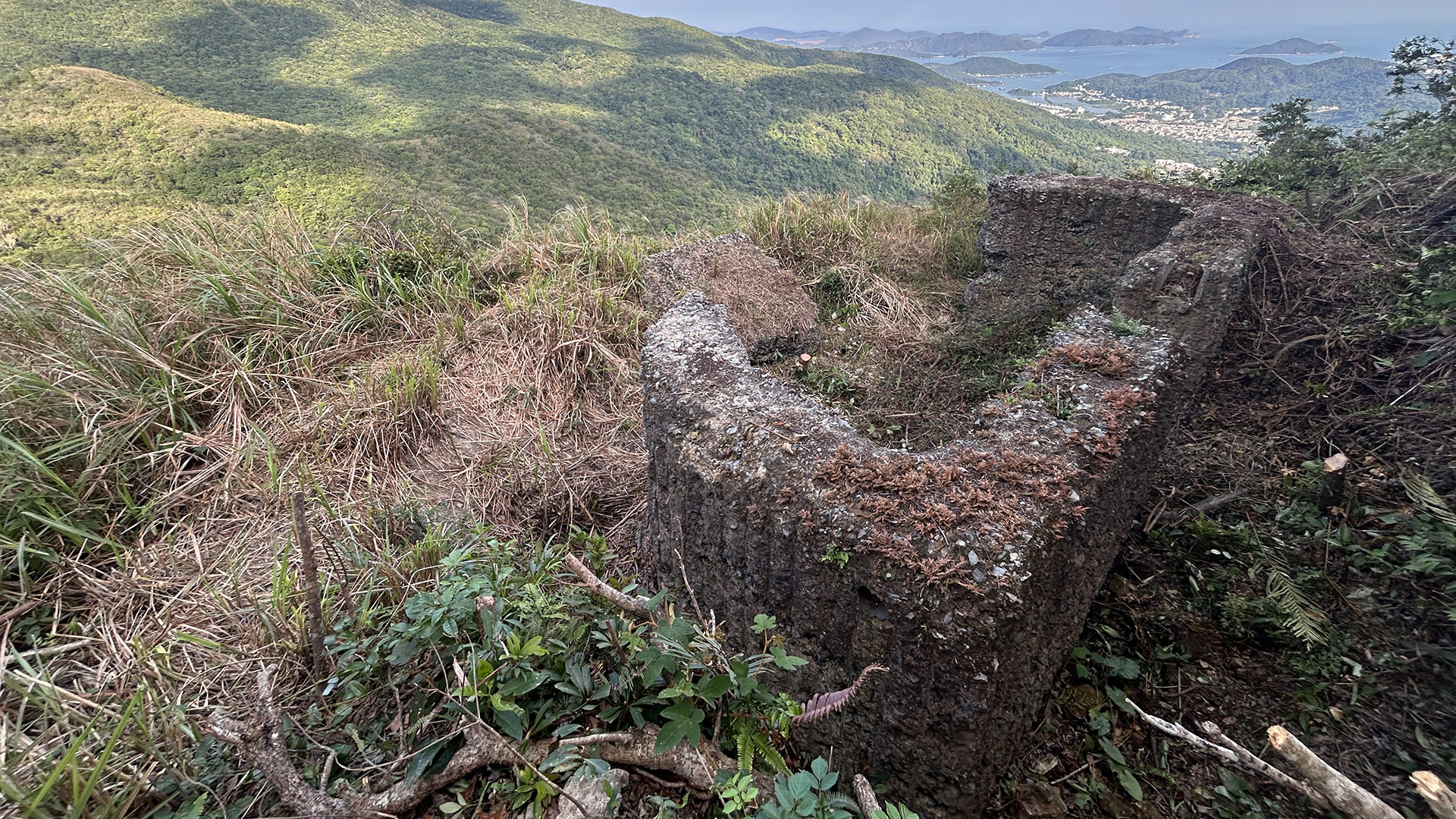
These three PB types can be found in both steep coastal areas and rugged countryside, at altitudes ranging from three metres near the high-water mark to nearly 500 metres up in the hills.
Hong Kong’s PBs are internationally significant due to their unique designs, and the accumulation of scientific knowledge about them, particularly in oral history, mapping, photography, and surveying. They also hold value in academic and professional domains including dissemination, appreciation, and curatorship.
Furthermore, Hong Kong’s defensive structures might be the only fortifications built by the British during WWII that were used in combat. Their performance under fire offers valuable insights into how British anti-invasion defences might have fared if Germany had invaded Britain during the war.
Even with the availability of hiking and heritage guides in recent years, and the presence of GPS-based maps on some military websites, visiting these sites in person still presents unexpected challenges.
Although they are shown on survey maps, the team found that there was no tourist information available for most of the PB relics along or close to popular hiking trails. Additionally, nature had taken things into its own hands, with nearly all PBs having become overrun by vegetation or unreachable due to impenetrably heavy undergrowth across their access paths.
However, the team was able to identify feasible paths to the surviving 59 PBs along the GDL and four other Japanese PB sites that are safe for visitors. The paths have been graded based on their condition and accessibility from larger roads, and guides produced with directions for getting to British PBs on Hong Kong Island, and to the Japanese PBs in the Northeastern New Territories.
They recommend the government classify and grade all these PBs for conservation purposes, and decide which deserve further investment for heritage tourism, like constructing viewing platforms, integrating them with the hiking trail network, and routinely maintaining and clearing their access routes.
The research team is led by Professors Sr Lennon Choy, Lawrence Lai and Daniel Ho, and assisted by Professor Stephen NG Davies, Sr Dr Ken Ching, Dr Justin Chan, Dr Nixon Leung, Mr YK Tan, Dr Vincent Chan, Mr Stephen Yip, Mr Stanley Au and other friends and students. The full research report has been submitted to the Government of the HKSAR, and English and Chinese versions of the e-book, A Short Guide to World War II Pillboxes in Hong Kong, have been published in September and November respectively, with a Japanese version coming soon – so stay tuned!