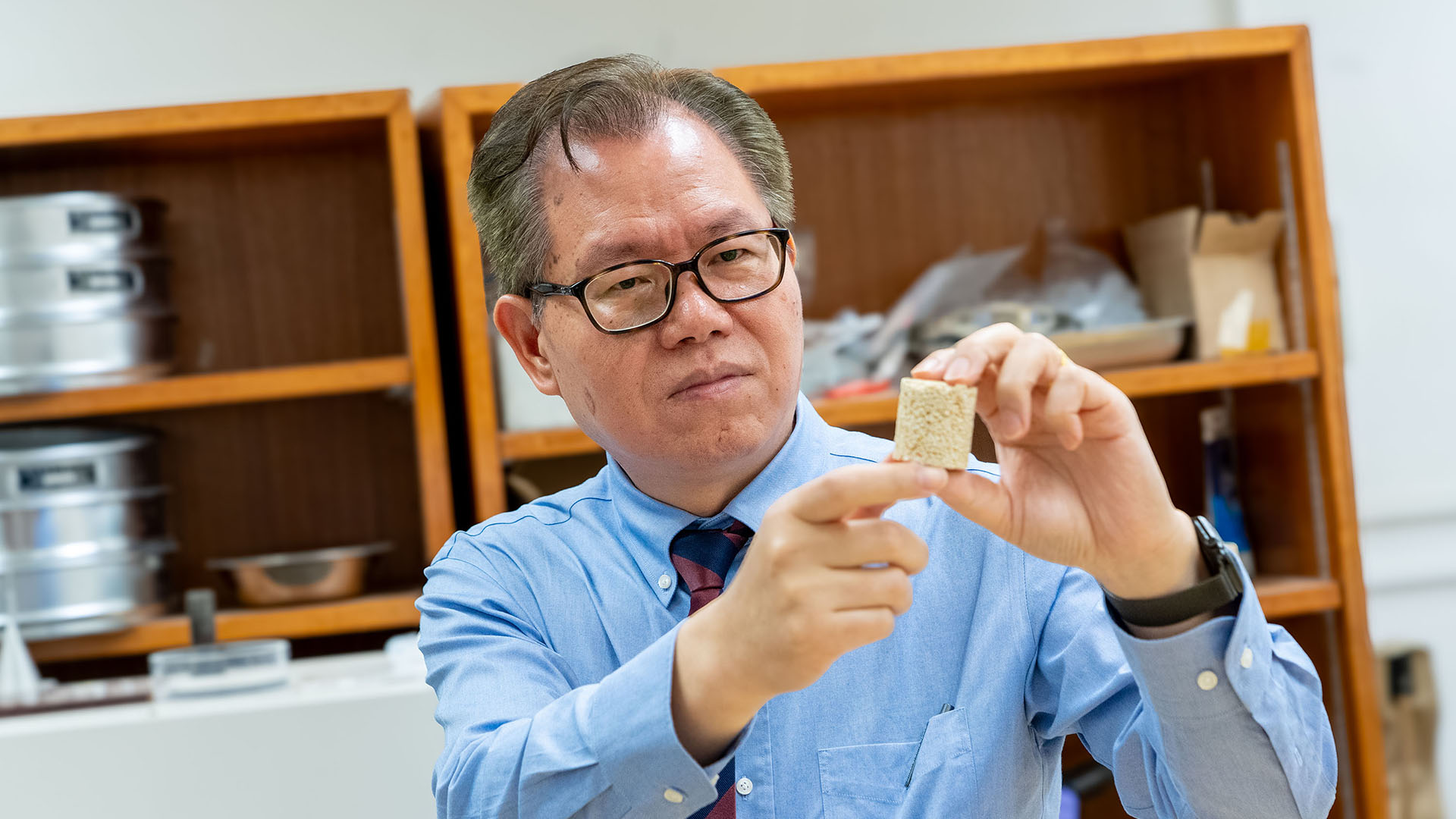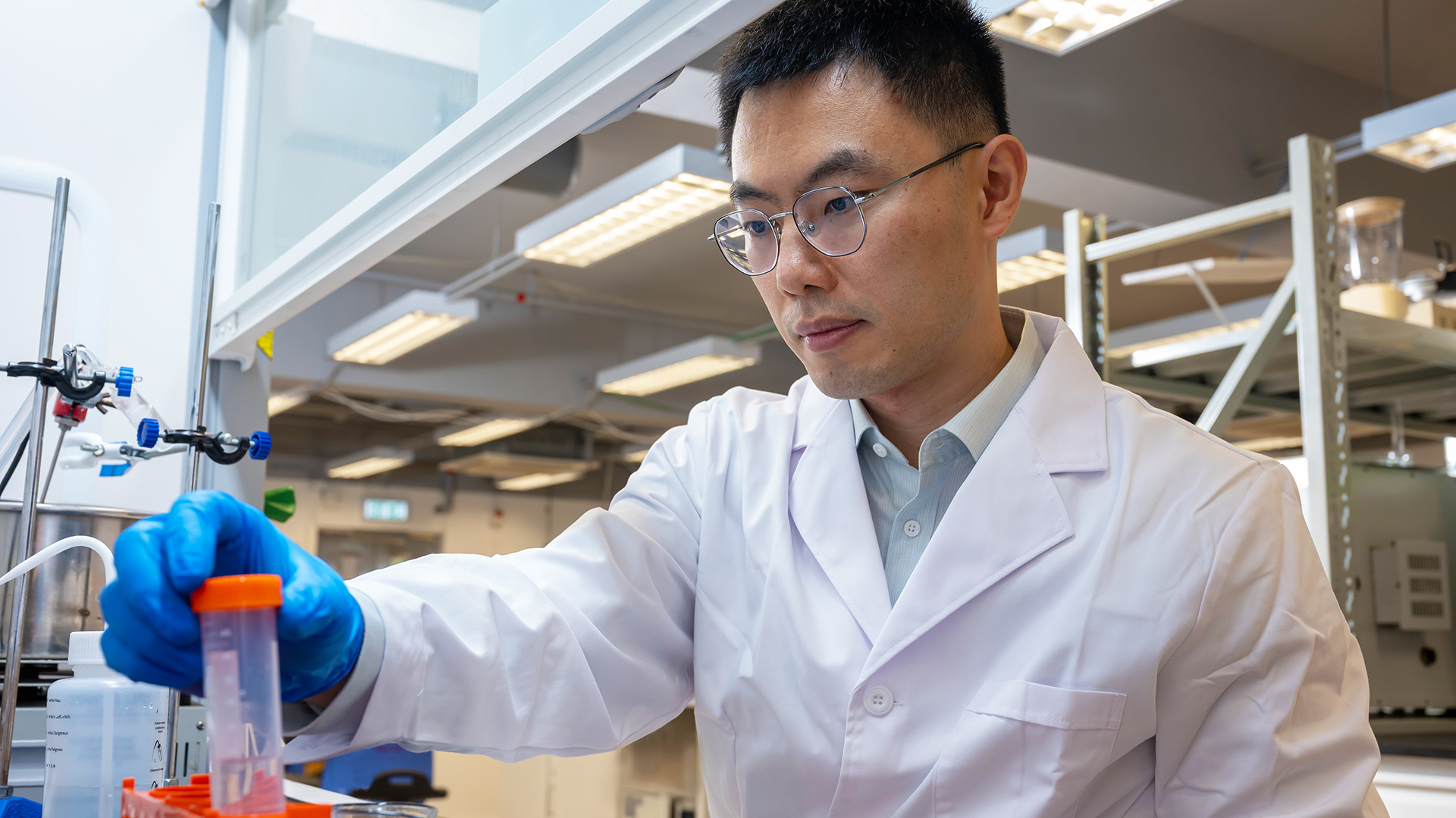
If you’ve ever noticed your mobile phone inexplicably heating up and you feel as if you’re suddenly holding a hot potato, then you’ll begin to have an idea of the importance of the work of Professor Jiawei Zhou, Assistant Professor of the HKU Department of Mechanical Engineering.
Professor Zhou conducts research on the movement of heat through materials and its effective control in technologies ranging from electronics to data centres. Thermal management has become a major scientific and engineering challenge as the need for computing power grows and the demand for energy efficiency intensifies.
For his groundbreaking research in thermal management, Professor Zhou has been chosen to receive the 2026 Croucher Tak Wah Mak Innovation Award. Established to support exceptional early-career scientists in Hong Kong, the Croucher Innovation Awards recognise researchers who demonstrate outstanding potential and a strong, internationally competitive track record. Each award provides a generous grant of HK$5 million to enable recipients to pursue innovative scientific endeavours.
“It is a tremendous source of encouragement for my team,” says Professor Zhou. “This recognition gives us the confidence to undertake ambitious, long-term original research and focus on the most fundamental and essential scientific challenges in microscale and nanoscale energy transport.”
Leveraging advanced computational and experimental techniques, Professor Zhou’s research explores heat transfer mechanisms across diverse materials to develop innovative solutions for electronics, batteries, data centres, and sustainable architecture. His work transcends conventional paradigms by investigating not only phonons – the atomic vibrations responsible for heat conduction in solids – but also electrons and molecules as alternative heat carriers.
“We focus on developing new materials with extreme thermal transport properties at the microscale and nanoscale while exploring active strategies to control heat flow,” says Professor Zhou. “Our research aims to predict, discover and develop new materials that approach or even exceed current benchmarks for heat conduction and insulation.”
Potential applications of these new materials include enhancing performance of mobile devices and improving cooling efficiency in large data centres powering AI technologies, and contributing to greener, safer energy solutions.
He notes that the microscopic mechanism of energy transport (for example, how electrons or molecules interact) is fundamental to developing new energy solutions. “We are particularly interested in the role of microscopic energy carriers in such dynamic processes,” he says. “The goal is to understand and potentially design energy transport pathways that enhance the efficiency.”
It’s also important to recognise that half of the global energy demands are supplied in the form of heat, which contributes to about 40% of global CO2 emission. Effectively transporting and utilising heat is critical to advancing the clean energy transition and achieving global carbon neutrality. Combining material design with a better understanding of how microscopic energy transport works offers new opportunities to enhance overall energy efficiency.
“Our goal is to engineer entirely new materials capable of pushing the limits of heat control and find ways to integrate them into real-world devices for a more sustainable future,” says Professor Zhou.