Book collecting is making a comeback! Recent reports highlight the increasing number of individuals worldwide engaging in book collecting. This suggests that the prediction – namely, that widespread online access to literature would render physical books obsolete – was premature. Or perhaps, book collecting simply never went out of style? An exhibition at HKU Libraries strongly supports this notion.
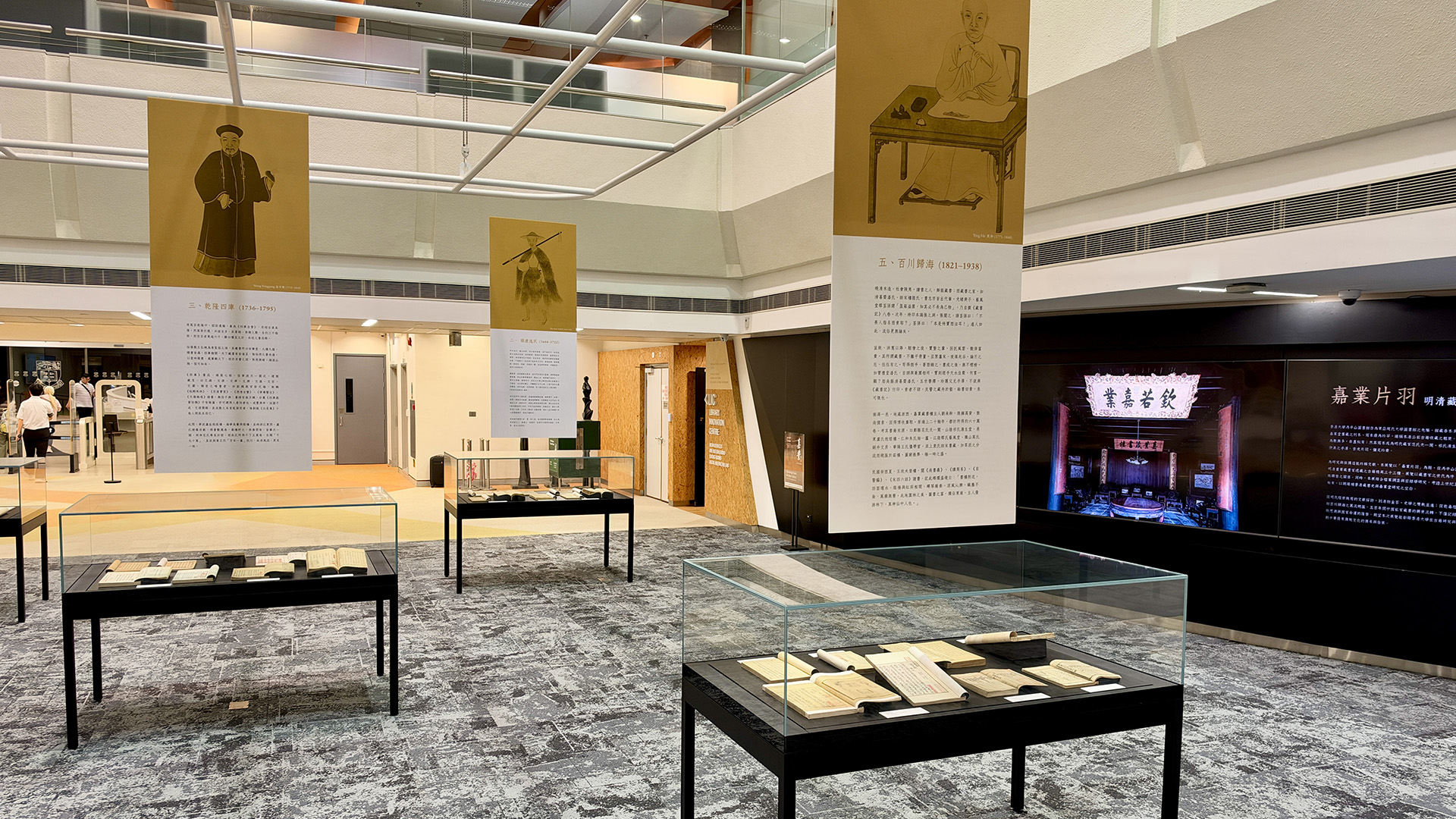
‘Gleanings from the Jiaye Library: Rare Books of Ming and Qing Bibliophiles’ is an exhibition that opened this month, jointly presented by HKU Libraries and the School of Humanities. On view at the Main Library, it offers an exceptional opportunity to see rare books from renowned Ming and Qing dynasty private collections. Crucially, each title on display was once part of the Jiaye Library, founded in Wuxing county (now the city of Huzhou), Zhejiang, by the legendary book collector Liu Chenggan (1882–1963). His vision saved these treasures of Chinese bibliophilism, preserving them through times of prosperity and upheaval.
“Liu Chenggan used his personal wealth to gather rare books from major book collectors in the lower Yangtze region,” explains Professor Yuanzheng Yang of the HKU School of Humanities and curator of the exhibition. “His approach to collecting was broad and inclusive: he welcomed anything distinctive. During the early Republican era, many bibliophiles saw book collecting as an investment – some focused solely on Song editions, others on multi-colour prints, for example. Liu Chenggan, however, was different. His taste was expansive; he valued rarity and uniqueness across all periods. Over time, his collection became a treasure trove. He began building the Jiaye Library in 1920 and completed it in 1924, making it accessible to scholars.”
Encyclopaedic in scope, the collection contains a highly curated set of Song and Yuan printed editions, paired with a spectacular array of bound manuscripts. These include rare items from the Tianyi Pavilion of the Fan family and the Dansheng Hall of the Qi family, dating to the Jiajing (1522–1566) and Tianqi (1621–1627) reigns of the Ming dynasty, as well as personal drafts with annotations by prominent Qing-era textual critics from the Qianlong (1736–1795) and Jiaqing (1796–1820) periods. These works are invaluable cultural and historical treasures.
“From the mid-16th century Ming dynasty up to today, whether in private collections or modern libraries, we all share a common pursuit: collecting, preserving, studying, and passing down books,” says Ms Lesley Liu, Head of Preservation and Conservation at HKU Libraries.
The HKUL Preservation Centre collaborated with Professor Yang to bring these treasured volumes that were held quietly in university collections into a comprehensive and carefully curated exhibition for public appreciation. “When Professor Yang first proposed the idea of showcasing the Jiaye Library’s rare books, we immediately agreed,” she recalls.
However, an exhibition of this scale posed challenges. “Our scope was broad, covering the history of Chinese book collecting from the Ming dynasty to the early Republican period, and ultimately to HKU in the 1950s,” notes Professor Yang. “Spanning over 500 years made it difficult to present a cohesive narrative.” To gain deeper insight, Professor Yang and Ms Liu visited the Jiaye Library on-site, exploring its historical context and the culture of book collecting it embodied.
This field trip inspired the exhibition’s narrative. “We hope to present not merely the rare books themselves, but to tell a story spanning 500 years through this collection,” Ms Liu explains.
Arranged by the collectors’ eras, the exhibition traces the evolution of bibliophilism and its profound relationship with shifts in scholarly currents over five centuries. “The sequence reflects the chronological order of the major Ming and Qing collectors rather than the age of the books,” adds Professor Yang. “This approach provides visitors with a clear understanding of the development of Chinese book collecting since the Ming dynasty.”
The exhibition features 43 volumes comprising 32 remarkable titles selected from over 120 rare books of the Jiaye Collection, held by the Fung Ping Shan Library. All these works were passed down through prominent Ming and Qing bibliophiles. “At its peak during the 1930s, the Jiaye Collection contained over 600,000 juan in 160,000 volumes, including more than 4,000 rare titles,” says Professor Yang. “We’ve titled this ‘Gleanings’ because we’ve selected only a tiny portion of the vast holdings of the Jiaye Library.”
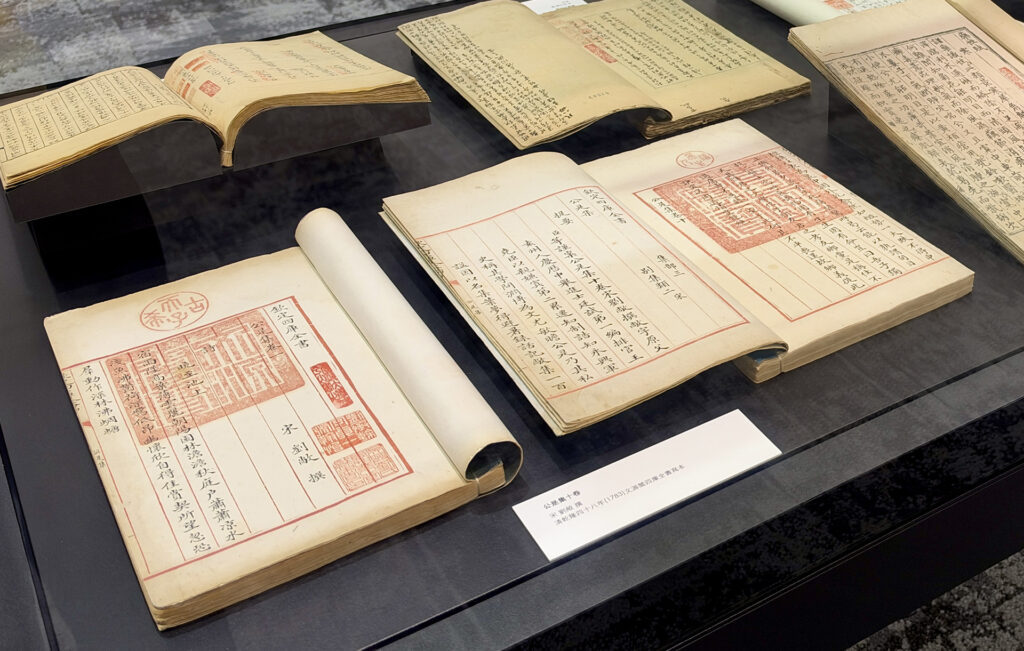
A highlight of the exhibition is a 1783 imperial manuscript of Gongshi ji (Collected Works of Liu Chang), part of the Siku Quanshu (Complete Library of the Four Treasuries). Ms Liu notes, “Seven manuscript copies of the Siku Quanshu were transcribed during the reign of Emperor Qianlong. In 1860, the Old Summer Palace was consumed by a catastrophic fire, reducing the set kept in the Wenyuan Pavilion to ashes. Today, the Gongshi ji displayed in this exhibition is the only work from the Wenyuan Pavilion copy to survive completely intact.”
The HKU Libraries house tens of thousands of items requiring ongoing preservation. Ms Liu’s team plan their conservation work carefully, prioritising based on condition and significance.
“Supporting teaching, research, and access to collections is central to our mission. Exhibitions serve as an important platform for sharing collections, promoting research, and enhancing public engagement with our holdings.” Ms Liu emphasises. “Once Professor Yang finalised the theme and the inventory of exhibits, we began retrieving relevant rare books for evaluation. Curating an exhibition involves much more behind the scenes than simply selecting items. The number of items evaluated often exceeds those displayed.”
Six colleagues from the Preservation and Conservation Division contributed approximately 800 hours to the project, taking part in item evaluation, selection, photography, conservation, installation, and environmental monitoring. “Every book is unique, bearing its own history and condition,” she explains. “Our goal is not to make every book look new or pristine. We respect their age and traces of use – wear, stains, insect damage, previous repairs – these are part of their story. Our conservation aims to stabilise, not to overhaul their appearance.”
During installation, the team mounts exhibits, tests display equipment, and monitors environmental conditions – light, temperature, and humidity – to ensure safe presentation.
Additionally, through detailed archival and bibliographical research, the exhibition reconstructs how these rare books from the Jiaye Library were acquired and transferred to HKU in the 1950s, filling a vital gap in the history of Chinese collecting and scholarship.
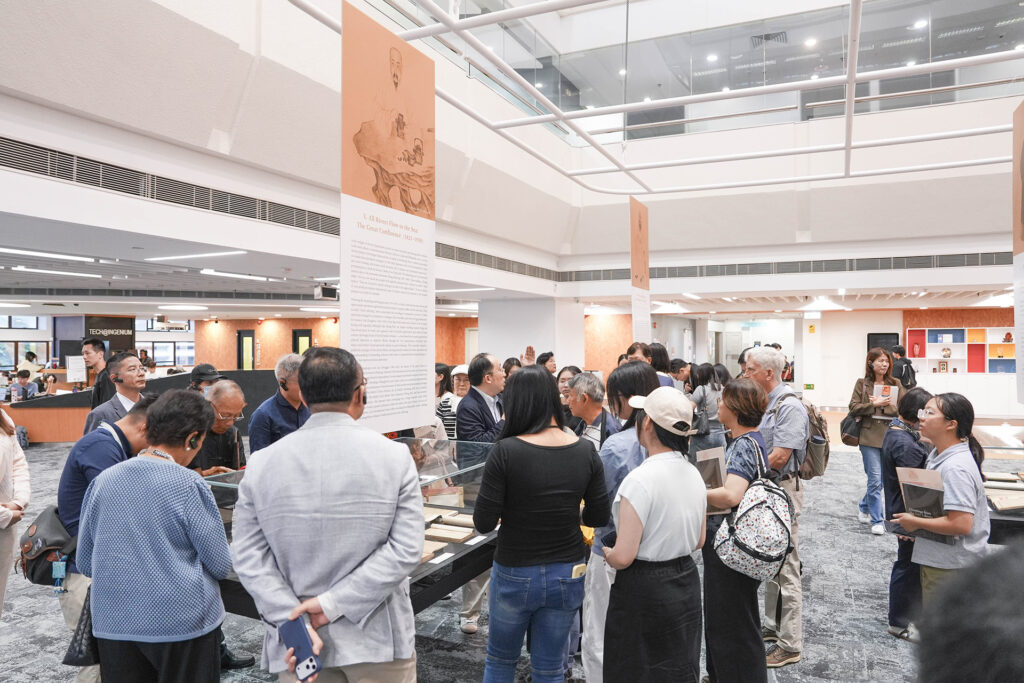
To complement the exhibition, HKU Libraries will host hands-on workshops on October 30 and 31, introducing traditional Chinese bookbinding techniques, including making a four-hole thread-bound book – a common style during the Ming and Qing dynasties. The workshops are already fully booked. On November 9, HKU will host an international symposium dedicated to Chinese rare books, with over 110 experts joining from China, the US, the UK, Germany, and Singapore. On November 11, HKU Libraries will hold a public forum featuring leading scholars of the Jiaye Collection, inviting the public to explore the fascinating stories behind these rare books.
“From the Jiaye Library to HKU, our original mission to safeguard ancient texts and inherit culture remains unchanged,” Ms Liu concludes. “This exhibition is a story of continuity and passion we hope to share with all.”
“As you explore the exhibition, I invite you to look beyond the covers and pages. Imagine the hands that copied these manuscripts by candlelight, the scholars who authored them, and the collectors who cherished them through times of uncertainty. May you find inspiration in their stories, and may this exhibition spark new conversations about the preservation and transmission of humanistic culture,” says Professor Yang.
- 6 October – 29 November 2026
- 2/F, Main Library, HKU
- Free admission. All are welcome.