One of the most important ways for medical students to learn about the human body is to, well, actually examine the human body.
Traditionally, this area of medical education is called gross anatomy, and deals with the study of bodily features that can be seen with the human eye. This will usually be the students’ first encounter with a real human body, which will also become their first and most special ‘patient’ during their studies – the Great Body Teacher.
At HKUMed, students learn to appreciate that Great Body Teachers play an irreplaceable role in medical education because they not only impart the knowledge of anatomy but, more importantly, provide an authentic hands-on experience of the human body that the students will carry forward in their future careers as healthcare professionals.
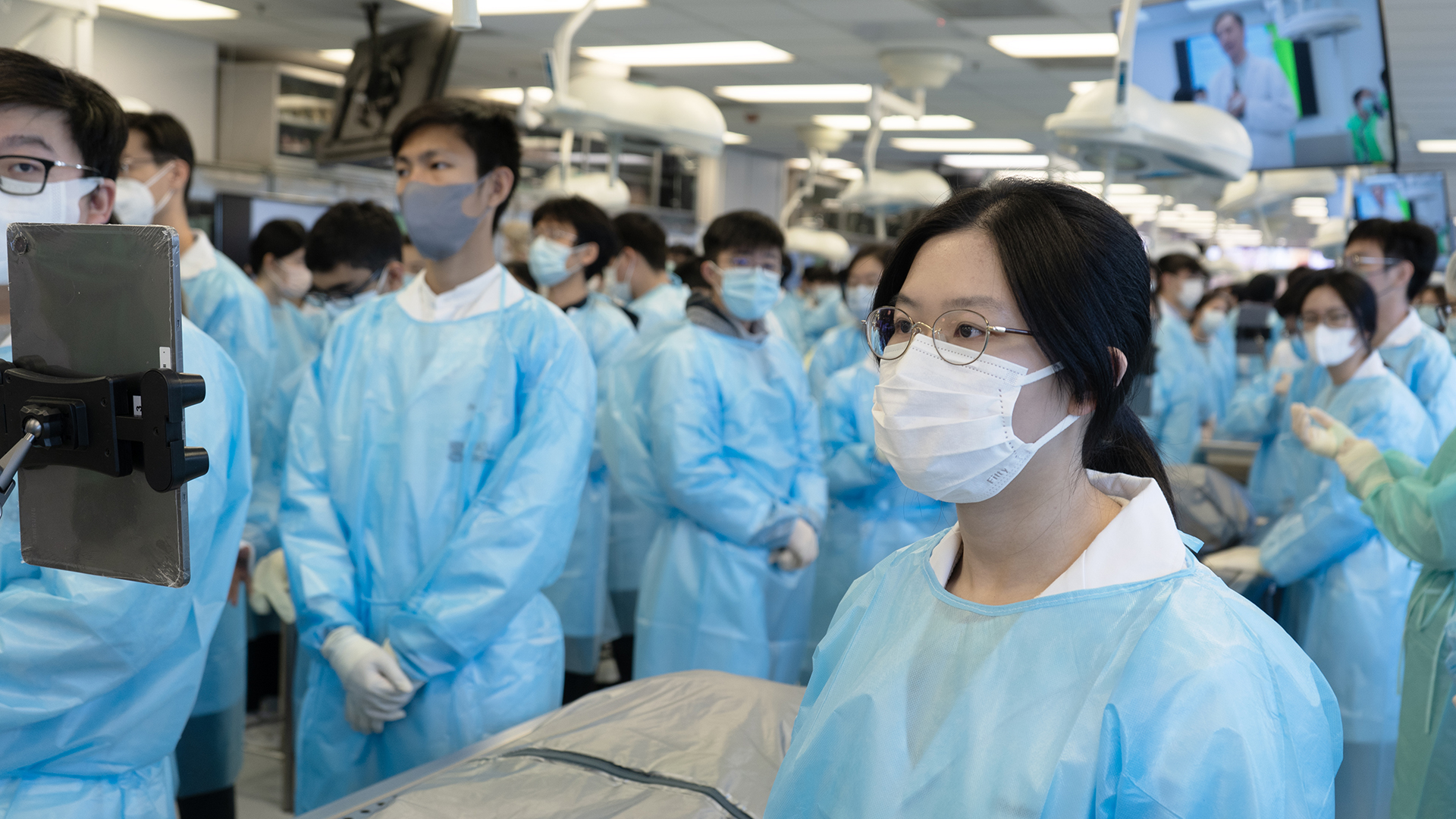
Before the start of each year’s anatomy class, anatomy teaching staff and students hold a solemn ceremony to honour the Great Body Teacher, reflect on the meaning of life and inculcate a sense of respect for patients.
The Great Body Teacher silently conveys deeper life philosophies such as love, respect, and dedication. They too were once, just like everyone else, living persons with family and friends. But they extended their lives and contributions to society beyond the border of life and death, and helped our students, scientists, and healthcare professionals obtain vital knowledge about not only the human body but also life.
These first encounters are often unforgettable and transformative in a medical student’s journey. Recalling her first moment in class this past January with her Great Body Teacher, student Dorothy Chan Wing-yan recalls, “At that moment, our identities transcended beyond medical students, we became intimate confidants of the body in front of us. Though pulseless, it was full of life, unveiling the secrets and amazements nature has bestowed upon mankind.”
“Textbooks and slide diagrams became tactile maps,” said another student, Leanne Chow Lok-yee, adding, “My hands shook at first, then steadied as curiosity and respect took over. The Great Body Teacher guided us with precision, pointing out textures, clinical correlation, and the ethical duty we owe donors.”
Donors are in fact not just important for nurturing medical students, but for the future of medical practice. Despite the rapid advancements in medical technology and their application to teaching, Great Body Teachers provide students with the opportunity to personally touch, feel, and understand every tissue, cell, muscle, and blood vessel in the human body – it is truly an irreplaceable and vivid experience.
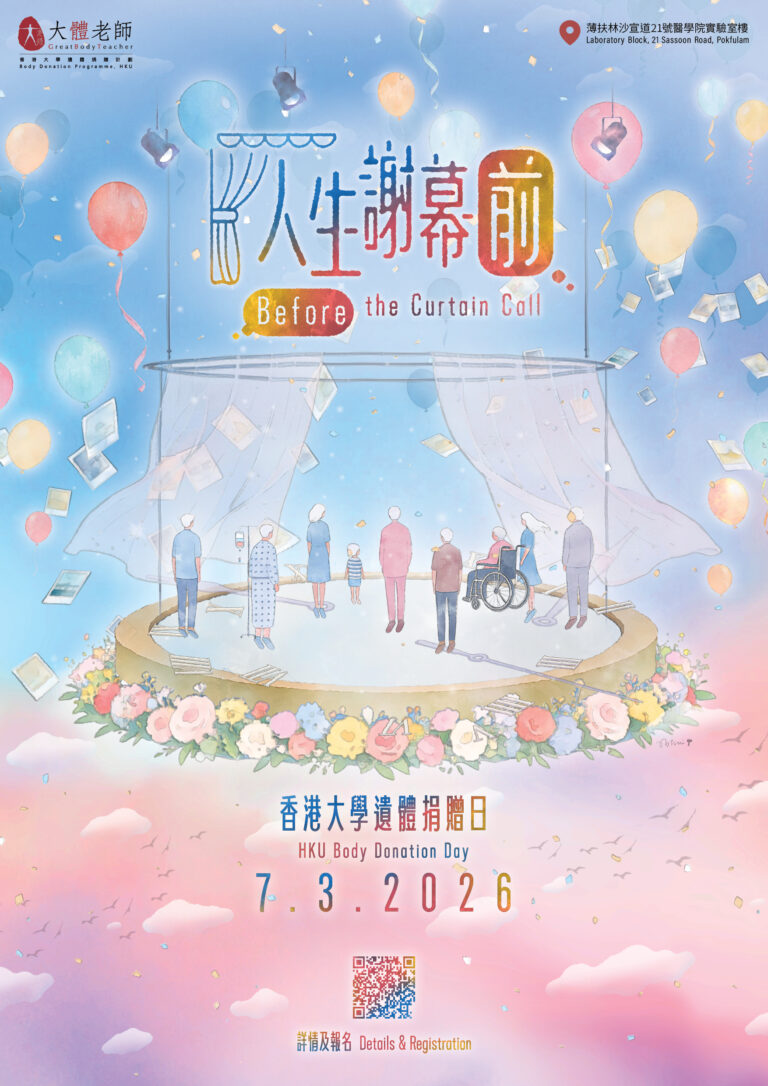
Which is why, since the 1970s, HKUMed has been accepting body donations for teaching and research purposes. The HKU Body Donation Programme was launched in 2012; the number of donations received by the Faculty has also increased from 13 in 2012 to an average of 80 to 90 per year. HKU Body Donation Day is also held annually to symbolise the spirit of the Great Body Teacher crossing the boundaries of life and continuing the tradition of knowledge transfer in universities.
This year’s HKU Body Donation Day will be held on Saturday, March 7, and all are welcome to join. The theme this year is ‘Before the Curtain Call’, featuring sharing sessions, exhibitions, and interactive activities, where the public can better understand how to approach topics related to life, death, and end-of-life planning.
The event’s goal is not only to encourage individuals of all ages to reflect thoughtfully on these universal themes but also to foster mutual support, communication, and understanding within families and communities.
In addition to the lectures and ongoing programmes, the Faculty has invited young funeral professionals, morticians, and social service organisations to share their insights, guiding attendees on a meaningful journey through life and death.
Over the years, it is thanks to the Great Body Teachers and their loved ones that medical education at HKU has been able to thrive, advance and benefit society. With the support of people from all walks of life, HKUMed will continue to nurture upcoming young medical talent through the HKU Body Donation Programme.